She Carries the Baby, But Shouldn’t Carry the Burden Alone
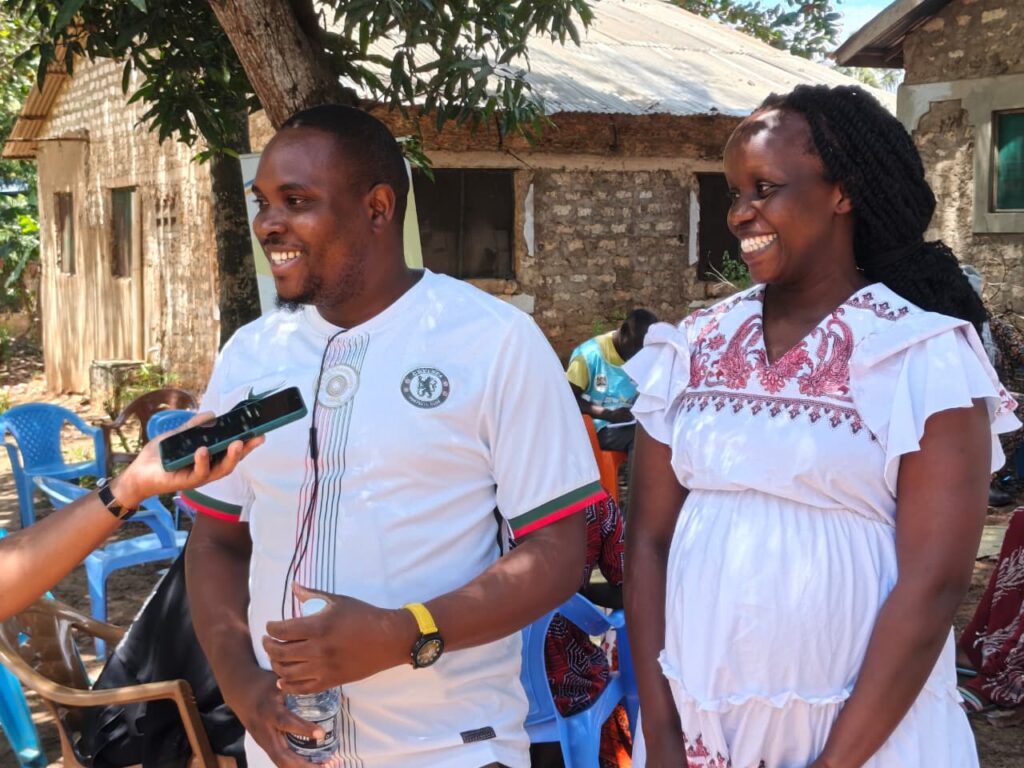
Beatrice Korir and her husband. (Photo By Caroline Katana)
By Caroline Katana
Email, thecoastnewspaper@gmail.com
A woman may carry a pregnancy for nine months, but health workers in Kenya’s coast region say she should not have to carry the responsibility for her health, the baby’s wellbeing, and decisions about the family’s future alone.
From antenatal clinic visits and recognising danger signs to preparing for childbirth and making decisions about family planning, men are being encouraged to move from the sidelines, and become active partners in the pregnancy journey.
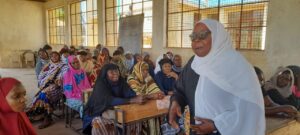
The message is taking root in Mwamambi A, Ukunda where a community health meeting brought together pregnant, and breastfeeding women, men and community health workers for discussions on maternal and child health, family planning and child care.
Among those attending was Beatrice Korir – an expectant mother – who is now in her seventh antenatal visit.
But unlike many women who make the journey to the clinic alone, Korir has had her husband, Jackson Mokeko beside her from the beginning.
“I feel very good having the support of my husband. He has attended all the clinic visits with me, from the first one until now as we approach the end,” she said.
Expecting her second child, the mother said the lessons from the meeting have come at an important time.
“We have learnt many things about family planning and how to care for a child from pregnancy until the child is five years old. I have benefited greatly because I am nearing delivery, and the training will help me take care of my child and also take care of myself as a parent.”
According to her she has experienced few challenges during the pregnancy because she has had someone supporting her throughout the journey.
She is now encouraging women who still deliver at home to seek skilled care saying health workers can identify complications that may not be detected outside a health facility.
“Giving birth in a hospital is important because they check your health and the health of the baby,” she said pointing to the position of the baby as one example.
“A baby can be in different positions in the mother’s womb. You may not know whether the baby is breech or cephalic, but when you go to hospital, they can determine the position and help you deliver safely,” she urged .
For Korir, however, the support she receives from her husband goes beyond accompanying her to the clinic.
She describes herself as a shy person and says Mokeko sometimes speaks on her behalf when they are discussing laboratory tests or other medical matters.
“If the doctor explains that the baby’s heartbeat is like this, or that the baby is not positioned properly, he also hears it. You don’t have to go home and tell him what happened,” she said.
She believes more men should do the same. Her husband, Mokeko, agrees.
For him, being present throughout his wife’s pregnancy is not a favour to her but a responsibility he has chosen to embrace.
“I did not get her pregnant and leave her. This is a responsibility I should take. You participate from the time the pregnancy occurs, attend the clinics together and continue until delivery,” he said.
What motivated him?
“Love. If you love your partner, you cannot leave her behind in matters concerning pregnancy. I love her very much.”
Mokeko’s involvement, however, remains unusual in a community where health workers say pregnancy and family planning are still often viewed as women’s matters.
Kimani Njoroge, a community health worker from Mwamambi A Community Health Unit, said men have traditionally been left out of family-planning discussions.
“The men and fathers at home have been left behind in matters of family planning. It is very important that they are involved so that they understand that family planning is not a secret matter,” he said.
The worker said some women might seek contraceptive services without involving their husbands which could create misunderstanding within families.
Njoroge believes involving men in reproductive-health decisions can also help families manage the financial demands of raising children.
“When a man allows his wife to plan their family, it helps him economically at home because the needs of the family can be matched with the plan.”
He said closely spaced pregnancies can put additional pressure on households including their ability to educate their children.
But persuading men to embrace family planning is not always easy.
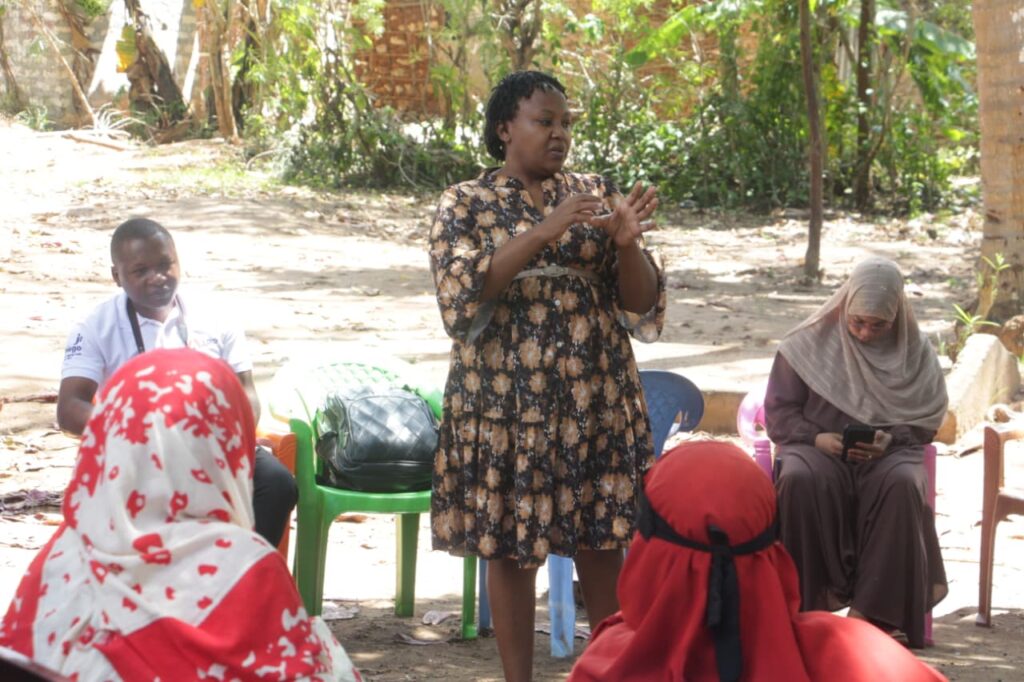
Njoroge said some men resist because of religious beliefs, while others rely on misconceptions passed down through generations.
“Some of them say it is because of religion. They believe that they came into this world to fill it, so when you tell them to plan their families while their religion tells them to have children, it becomes difficult.”
Others, he added, hold beliefs that have little basis in evidence. He believes continued education can help communities challenge some of these long-held beliefs.
“When they get proper information, some of these old beliefs can disappear.”
For community health worker Mary Mutua, the challenge begins even before a woman reaches the delivery room.
She said community health workers continue to encourage pregnant women to attend clinics early, complete their antenatal visits and recognise warning signs that require urgent medical attention.
“We encourage them to go to the clinic early and teach them about the danger signs for a pregnant mother, such as bleeding.”
Family planning is also introduced before delivery so that women can consider their options after childbirth.
She said closely spaced pregnancies can make it difficult for mothers to recover and adequately care for their children.
“If she gives birth and is able to start family planning, she can meet the needs of her child because there are women who have children one after another. Their situation becomes very difficult,” she said.
The meeting also covered childhood vaccination and immunisation which Mutua says some parents still do not fully understand.
The large turnout of women offered encouragement, but the number of men attending exposed the very challenge the organisers were seeking to address.
Samuel Gindo, finance officer at Fanikisha Foundation, said the organisation deliberately chose Mwamambi A after observing that many women were attending health facilities without their husbands.
“We have seen many women coming to hospital without their husbands. So we thought that if we came to the community and trained men, they could accompany their wives to hospital,” he said.
Only seven men attended the session, with one accompanying his wife.
For Gindo, the low turnout reflects a wider cultural attitude towards healthcare.
“In this coastal community, we often consider going to hospital to be a woman’s matter. Many men are very reluctant and may only go to hospital when their condition becomes serious.”
He believes bringing health education closer to men could help change that attitude.
“It is good for the husband to come because there are things he will hear and understand, and he can support his wife with her health and the health of the baby,” he said.
Family planning, he added should also be approached as a shared responsibility.
“Family planning is very important for the health of the mother. If we as men do not work together with women in planning the family, when she experiences pain or pregnancies that are too close together, she may not have recovered properly,” he said.
The challenge facing Mwamambi A is therefore bigger than getting husbands to accompany their wives to antenatal clinics.
It is about changing the perception that pregnancy, childbirth and family planning are women’s issues.
The community health workers want men to understand the information their wives receive, participate in decisions affecting their families and support women before complications arise.
For Korir, that change has already begun at home.
As she approaches the end of her pregnancy, she is not only preparing to welcome her second child.

She is doing so with a partner who has listened to the same health advice, attended the same clinics and shared in the responsibility of preparing for their child’s arrival.
She carries the baby.
But with her husband walking beside her, she does not have to carry the burden alone.