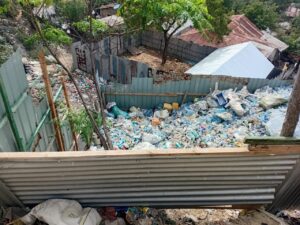
From Waste to Livelihood: How a Mombasa Youth are Turning Plastic Into Opportunity
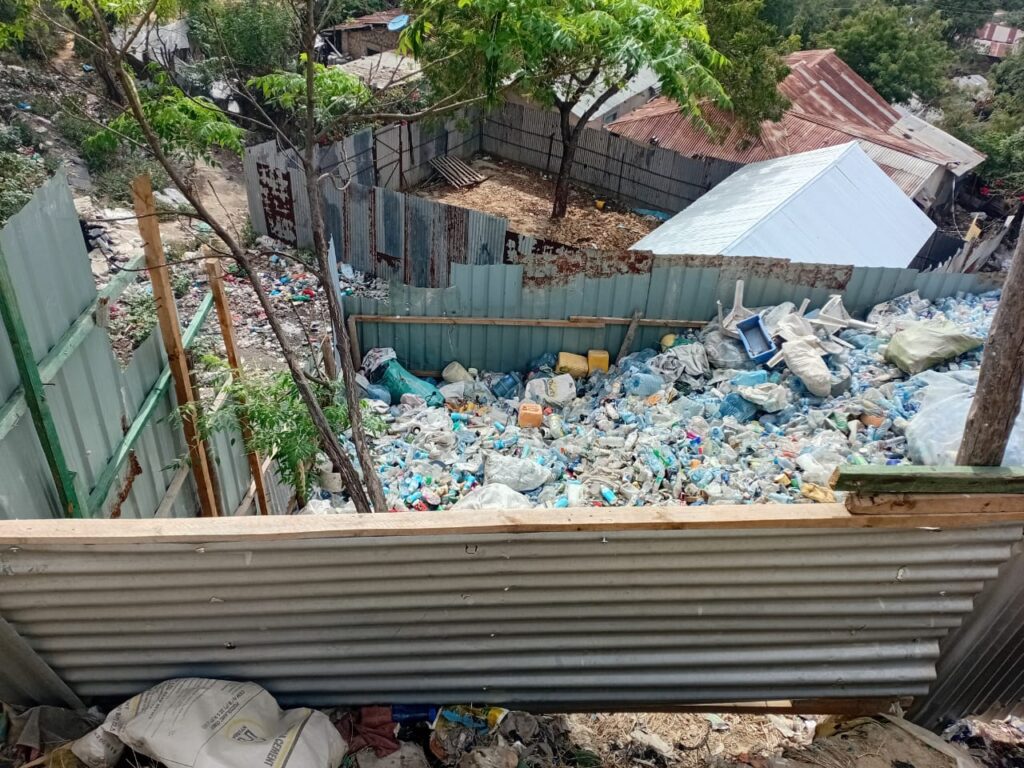
(Photo/ Courtesy)
By Caroline Katana
Email, thecoastnewspaper@gmail.com
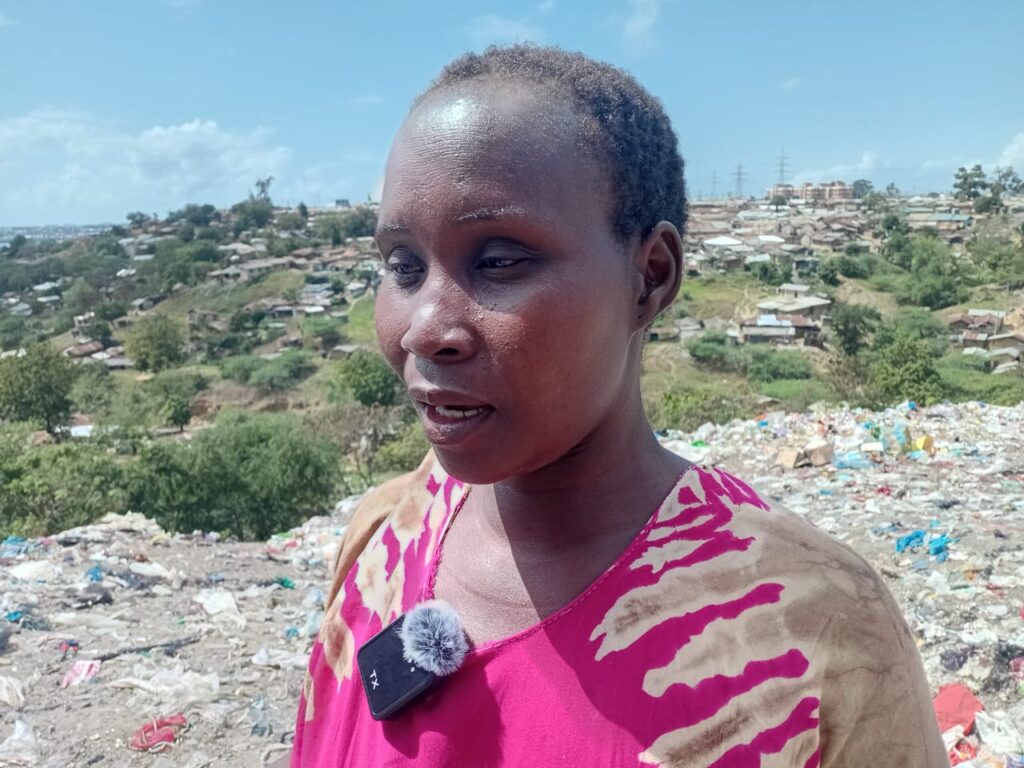
For Elvina Ziro, plastic waste is more than rubbish scattered around her neighbourhood. Its a source of income that helps put food on the table and keep her five children in school.
For the past three years, Ziro has worked as a waste picker, collecting, and sorting recyclable materials brought to a waste collection site in the Mikindani area of Mombasa County.
The work is not always predictable.
“Sometimes I find a lot, sometimes there is little. So it has its challenges,” she said.
But whatever she earns from the materials she collects makes a difference to her household.
“The project helps me with food and educating my children. What I get from selling the waste helps me in both areas,” she said.
Her story reflects a wider reality in communities where unemployment, poor waste management and environmental degradation have often existed side by side.
But at the PlastSafi waste management site, discarded plastic is being given a second life while creating livelihoods for young people and women.
The initiative, run by Pwani Youth Network, collects plastic waste from households, sorts it and processes it into paving blocks.
Instead of allowing the plastic to end up in dumpsites, drainage channels or the ocean, the project turns it into a product that can be used in homes, compounds and roads.
For young people who once struggled to find work, the waste has become an unlikely economic opportunity.
James Kazungu said he joined the initiative after spending years idle in his neighbourhood.
Seven years ago, he said, he was mainly playing football and had little to do.
He later started collecting waste from households before undergoing training that enabled him to acquire new skills.
He has since progressed from being a waste picker to operating machinery at the facility.
“The project has helped me. I have gained skills that I can use to engage with the community, and I have moved from being a waste picker to an operator,” Kazungu said.
His message to other young people is simple, waste should not automatically be viewed as worthless.
“Waste is wealth. We are buying waste at a good price. A young person should not just sit at home and say there are no jobs. Go out, collect some plastic and I am sure you will get something to put in your pocket,” he said.
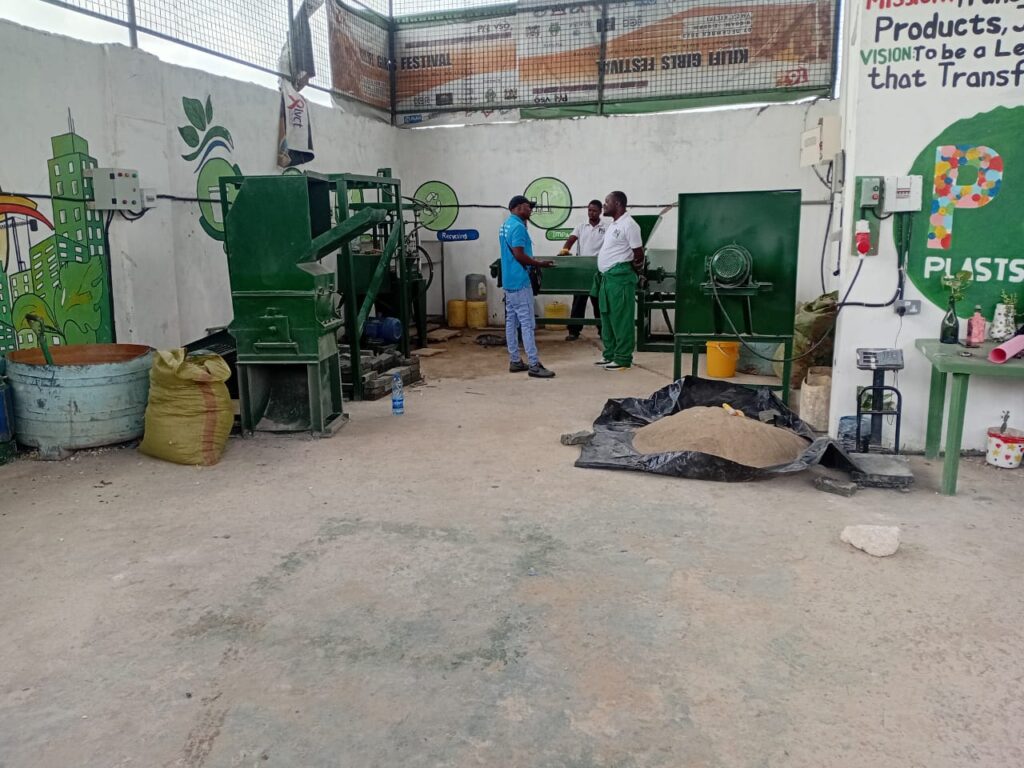
At the PlastSafi yard, the process begins with sorting.
Plastic is separated according to type, with the project mainly using PET plastics.
The material is then shredded before being mixed with sand and moulded into paving blocks. VThe blocks are pressed into shape and cured before being prepared for the market.
Alfred Sigo, director general of Pwani Youth Network and leader of the PlastSafi initiative, said the idea was born from two problems facing Mombasa, plastic pollution, and youth unemployment.
The project is built around the principles of a circular economy, where materials that would otherwise become waste are kept in use by turning them into new products.
Sigo said Mombasa produces large amounts of waste, yet only a fraction of plastic is recycled.
At the same time, he said thousands of young people remain without employment or opportunities.
“We asked ourselves how we could engage these young people, create jobs and at the same time reduce waste. That is how we started this initiative,” he said.
The project currently works directly with waste managers and sorters while also supporting people who collect recyclable materials from households.
More than 5,000 households are reached through the waste collection network, according to Sigo. The facility receives more than four tonnes of waste a day and recycles about 2 to 2.5 tonnes of it.
For the organisation, the benefits go beyond producing paving blocks.
Before the site was better managed, Sigo said, waste accumulation contributed to insecurity, disease and frequent fires.
Plastic waste was often mixed with other rubbish and when fires broke out, smoke from burning waste posed another danger to residents.
Sigo said the situation has changed since the project began. “Young people are getting jobs, so insecurity has reduced. Diseases have also reduced because we now have a well-managed garbage centre. And there have been no fires here for the past two years.”
Poorly managed waste does not stop at the boundaries of a dumpsite. During heavy rains, plastic and other waste can block drainage systems, creating stagnant water and worsening flooding and sanitation problems.
For communities living near the waste site, keeping the environment clean is therefore also a public health concern.
Sigo said the project has trained residents on waste separation and encouraged communities to manage waste before it becomes an environmental hazard.
The initiative also supports waste pickers with protective equipment, including gloves and other personal protective equipment, as well as relevant vaccinations.
For Ziro, however, the environmental benefits are closely connected to the economic ones.
The more recyclable waste that is collected and sorted, the more opportunities there are for people like her to earn an income.
The project is also challenging the perception that waste management is work only for men.
Loice Khayanje has worked as a waste manager at the facility for two years. She said her motivation came partly from seeing how careless disposal of waste was affecting the environment around her.
“When you are passing on the road and you step on waste that someone has thrown carelessly, it makes the environment unattractive,” she said.
She decided to enter the waste management sector not only as a career, but also to demonstrate that women can play a role in environmental conservation.
“I want to be a role model for women outside there who feel that women being in the waste management sector is unhealthy or unsexy.”
Her presence at the facility is part of a wider effort to ensure women are included in the emerging green economy.
For Raphael Kong’ani, the journey has been equally transformative. A visual artist, Kong’ani initially joined the project as a waste picker.
He had struggled with idleness after completing his studies and eventually began using his artistic skills to transform discarded materials into useful products.
He has now worked with the project for three years and progressed from volunteer to employee and machine operator.
“I started as a volunteer and now I am one of the staff. I have been employed. That is the biggest benefit I have gained through commitment and pushing myself,” he said.
Kong’ani believes young people should look at waste differently. “Try not to choose what to do. Try to be creative. When you see waste, try to be creative with it.”
He also urges residents to take responsibility for how they dispose of waste.
“Waste disposal affects the future greatly. People may not see the impact now, but everyone should avoid throwing waste anywhere and take it to where it is supposed to go,” he said.
The environmental problem extends beyond the immediate community.
Sigo links plastic pollution to the health of the marine ecosystem, saying large quantities of plastic eventually find their way into the ocean.
For a coastal counties whose economy is closely connected to fishing and the sea, he said reducing the amount of plastic reaching the marine environment is critical.
He argues that projects such as PlastSafi can contribute to climate and environmental action by reducing uncontrolled dumping and open burning of waste while creating livelihoods for young people.
“The project is timely because climate change has become a major challenge. We need to reduce the plastics entering our ocean, and young people are at the centre of implementing this solution,” Sigo said.
The paving blocks produced by PlastSafi are intended to provide another incentive for communities to collect plastic.
Sigo admitted that the blocks are durable and slightly cheaper than conventional paving blocks, while their purchase supports employment and keeps plastic out of the environment.
The model therefore attempts to connect three needs that are often treated separately — waste management, environmental protection and employment.
But keeping such a model running is not without difficulties.
The organisation says changing waste management regulations, high electricity costs, fluctuating plastic prices and taxation are among the major challenges affecting its operations.
The machinery requires substantial electricity, making energy costs a significant expense.
Khayanje said solar power could help reduce the burden.
Plastic prices also fluctuate, making it difficult for waste businesses to predict their operating costs and compete in the market.
The organisation is also calling for simpler and more efficient procedures for waste management operators to obtain the necessary approvals.
Khayanje said government support is needed, particularly in waste collection and transportation.
A dedicated truck, she says, would help move waste from the site and improve the cleanliness of the dumpsite.
The project is part of a broader partnership involving Childfund Kenya, DOT, MasterCard, and Hand in Hand Eastern Africa, among other organisations.
Collins Mudhomi of Hand in Hand Eastern Africa said their support focuses on helping young people see waste not simply as rubbish but as a resource with economic value.
Through its Waste to Profit initiative, the organisation trains youth groups and supports enterprises seeking to turn waste into income-generating opportunities.
“What some people see as waste can be a raw material for another company, and from it they can generate income,” Mudhomi said.
He said the approach creates employment while keeping young people and women economically engaged and improving the environment.
The initiative operates within a wider network of Pwani Youth Network programmes covering Mombasa, Kilifi and Kwale, including health, education, libraries, sports and creative arts.
But at Plast Safi, the immediate lesson is visible in the people working around the waste.
A mother is earning money to feed and educate her children.
A young man who once spent his days idle has become a machine operator.
A woman is building a career in a sector traditionally viewed as dirty and unsuitable.
An artist is turning discarded material into something useful.
And tonnes of plastic that could have ended up in the ocean or buried in a dumpsite are instead being fed into a circular economy.
The challenge now is whether this model can move beyond one site and be supported at the scale required to tackle Mombasa’s growing waste problem.
For the people already benefiting from it, however, the transformation has already begun.
What was once considered rubbish is now paying school fees, creating jobs, supporting families and becoming part of a solution to one of the Coast’s most persistent environmental problems
About The Author