A New Theory of County Government: From Projects to Transformation

Some of the Road networks in Kenya. (Photo/ Courtesy)
By Prof Hamadi Iddi Boga
Email, thecoastnewspaper@gmail.com
More than a decade after the introduction of devolution, county governments have delivered many important achievements.
Roads have been built, markets constructed, health facilities expanded and public services brought closer to the people.Yet many citizens still ask a simple question: Why has so much money been spent while poverty, unemployment and inequality remain so widespread ?
The answer, I believe lies not in the amount of money available, but in the way we think about development.
For too long, county governments have measured success by the number of projects completed rather than the number of lives transformed.
Every budget cycle begins with a long list of projects. Every ward demands its share. Every elected member of the County Assembly (MCA) wants something visible to point to.
In the process, resources are spread so thinly that they rarely solve the underlying problems facing our communities.
Presumably, we end up with more buildings than services, more markets than traders, more dispensaries than nurses, and more projects than measurable impact.
However, it is time to rethink the purpose of county government.
Primary responsibility of a county government is not to construct projects, but to create opportunities and improve the quality of life of its people. Projects are seemingly one of many tools available to achieve that purpose.
The true measure of success is literally not how many buildings we construct, but whether farmers earn more, young people find meaningful work, businesses grow, families access quality healthcare, children receive better education, and communities become safer and more prosperous.
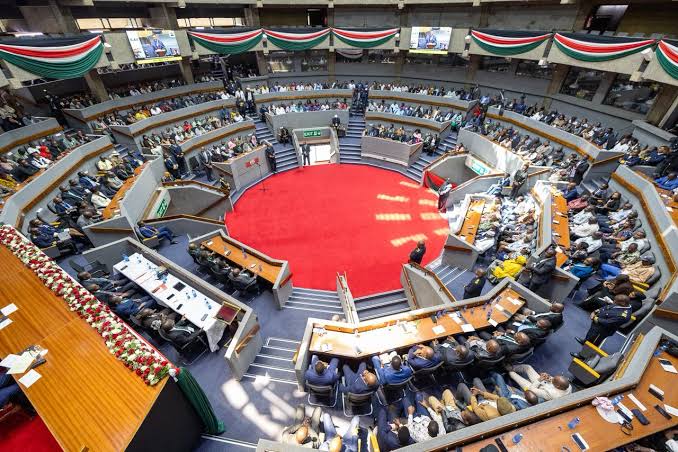
Additionally, this requires a fundamental shift from project-based governance to mission-based governance.
Mission-based governance begins by asking a different question. Instead of asking, “What project should we build?” it asks, “What problem are we trying to solve?”
Instead of measuring kilometres of roads or numbers of buildings, it measures impact such as reduced poverty, increased household incomes, lower youth unemployment, improved learning outcomes, cleaner towns and stronger local businesses. Every investment is judged by the value it creates for citizens.
Moreover, public participation must also evolve. Rather than becoming a forum for inceasingly compiling wish lists of projects, it should become a conversation about the biggest challenges facing each community and the best solutions to address them.
Citizens should as well help define priorities, not simply select infrastructure. On the other hand, elected leaders should relatively be judged not by the number of projects they launch, but presumably by the improvements they deliver in the lives of the people they represent.
This approach similarly calls for greater collaboration. Many of the challenges facing our counties—youth unemployment, crime, poor health, environmental degradation and low agricultural productivity—cannot be solved by one department acting alone.
They require county government, the national government, the private sector, civil society, faith-based organisations and communities to work together around shared goals with clear accountability and measurable results.
At the heart of this new approach, is a simple belief: every public shilling must create public value. Every investment should answer three questions.
What problem are we solving? How will people’s lives improve? How will we know that we have succeeded? If we cannot answer those questions clearly, then we should reconsider the investment.
This is the future I envision for county government. A government that plans before it spends. A government that invests in people as much as it invests in infrastructure. A government that measures success by opportunity created, lives transformed and hope restored. A government that sees every road, every school, every health facility and every market not as an end in itself, but as a means of helping people realise their full potential.
That is the promise of devolution. Not simply to bring government closer to the people, but to bring opportunity, dignity and prosperity closer to every family.
When devolved units begin measuring success by the lives they change rather than the projects they complete, we will finally unlock the transformative power that devolution was always meant to achieve.
About The Author