KMA Leads Planting of 25,000 Mangroves to Restore Kilifi Coast
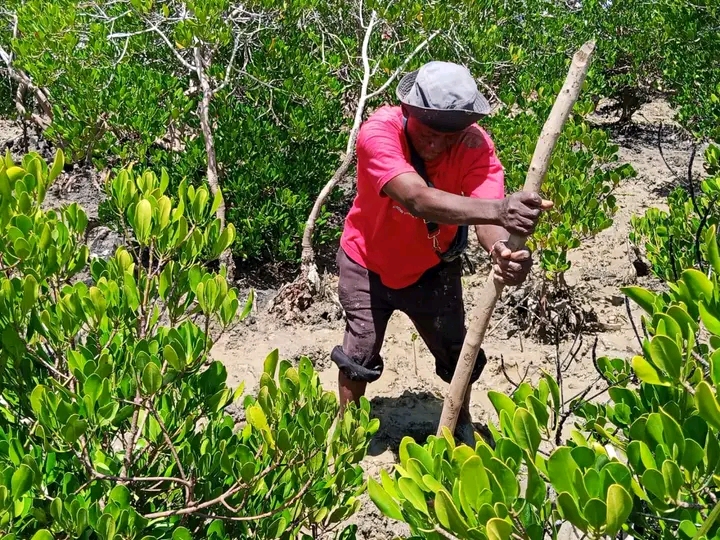
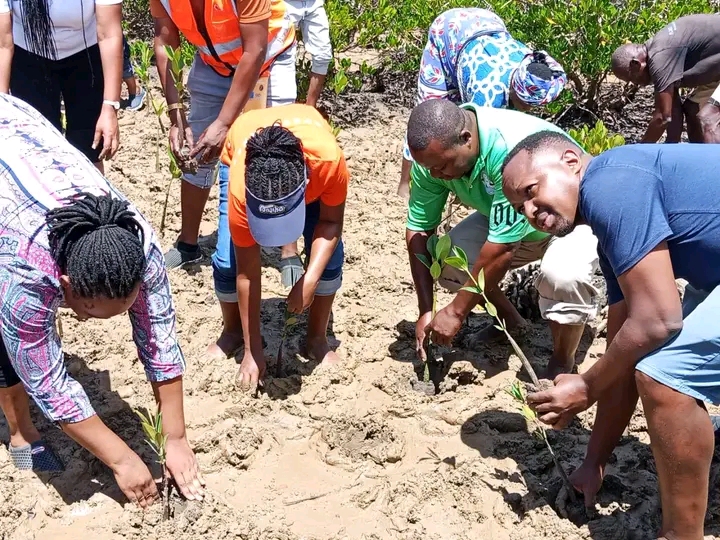
KMA official planting mangrove in Kilifi(Photo By Robby Ngoba)
By Mbungu Harrison
Email, thecoastnewspaper@gmail.com
The Kenya Maritime Authority (KMA) in collaboration with the Kenya Forest Service (KFS) and the Mtakimau Community Forest Association (CFA) has planted 25,000 mangrove seedlings at Kilifi Creek’s Dzombere shoreline marking a significant step in coastal ecosystem restoration.
The initiative, which rehabilitates 25 hectares of mangrove forest, is part of the National Tree Growing and Restoration Campaign; a presidential directive aimed at reversing environmental degradation and strengthening ecosystem resilience across the country.
The five-year rehabilitation programme has been underway since its launch in 2021.
Speaking during the exercise, KMA director general CPA Omae Nyarandi reaffirmed the authority’s commitment to environmental conservation noting that the partnership with KFS demonstrates the impact of joint stewardship in restoring degraded coastal ecosystems.
He emphasized that such efforts contribute toward achieving Kenya’s target of 10% national forest cover while delivering long-term ecological and socio-economic benefits to coastal communities.
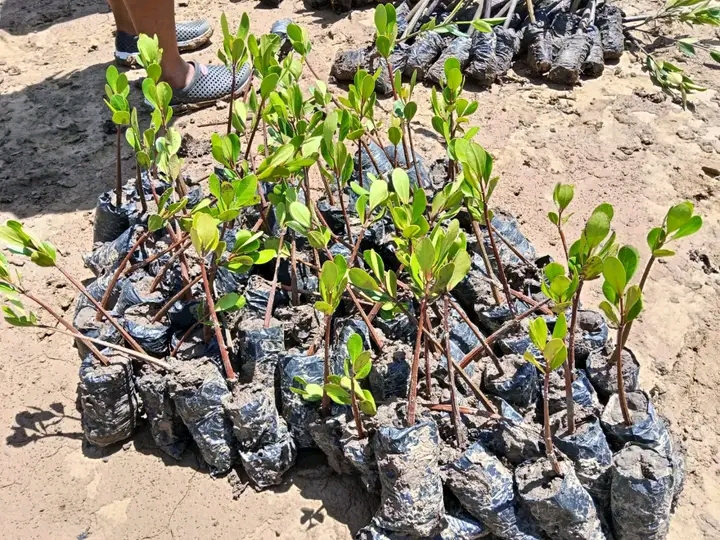
The exercise, spearheaded by KMA and coordinated by KFS station manager Sarah Zawadi and Mtakimau CFA chairperson Elijah Chivatsi brought together government agencies, stakeholders, and local residents in a shared commitment to environmental sustainability.
With this latest activity, the authority’s cumulative tree planting record has reached 669,034 trees; up from 644,034.
So far, nine (9) hectares of the targeted 25 hectares have been restored, reflecting steady progress in the authority’s environmental agenda and corporate social responsibility efforts.
Mangroves play a critical role in coastal ecosystems by protecting shorelines from erosion, providing breeding grounds for marine life and birds, acting as natural buffers against storms, and absorbing carbon dioxide to help mitigate climate change.
Highlighting the community impact of the initiative, Chivatsi noted that the programme has generated income through casual labour and seedling sales.
“These proceeds have supported local development projects, including the purchase of a records laptop, honey harvesting equipment, renovation of bandas and boardwalks, payment of school fees, and a Ksh100,000 down payment for a single-engine motorboat, ” he said.
Both KMA and KFS have called on communities to continue embracing tree planting and environmental conservation efforts as a means of combating climate change and preserving biodiversity for future generations.
About The Author