WWF-Kenya Wants Media to Champion Science-Based Mangrove Restoration

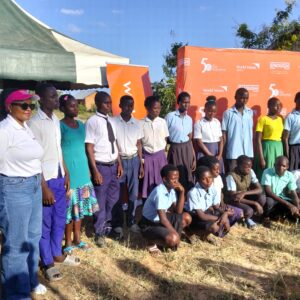
Journalists taking part in mangrove planting. (Photo/ Courtesy)
By Mbungu Harrison
Email, thecoastnewspaper@gmail.com
Journalists have been urged to promote science-based approaches to mangrove restoration to ensure long-term successive conservation efforts along Kenya’s coastline.
Speaking during a two-day media sensitization workshop held from March 10–11, 2026, WWF‑Kenya officer Nathaniel Mwangeka called on media practitioners to reference key national technical documents when reporting on mangrove conservation.
These include the National Mangrove Ecosystem Restoration Guidelines and the National Mangrove Ecosystem Management Plan.
The workshop brought together journalists from coastal counties to strengthen their understanding of Community-Based Ecological Mangrove Restoration (CBEMR) and the critical role the media plays in shaping public awareness on environmental issues.
“Mangrove ecosystems are vital to Kenya’s coastal environment. They protect shorelines from erosion, shield communities from storm surges, support fisheries, and sustain the livelihoods of many coastal residents.
However, these ecosystems continue to face growing threats from unsustainable land-use practices, coastal development, and climate-related pressures,” he said.
Despite increased mangrove planting campaigns across coastal areas, experts warn that many initiatives fail to achieve the intended ecological outcomes.

According to him research indicates that up to 80 percent of mangrove planting efforts fail when key ecological conditions such as tidal flow soil characteristics, and site suitability are ignored.
According to conservation experts a research scientist at Kenya Forestry Research institute (Kefri) Henry Komu the common belief that mangrove restoration simply involves planting trees has contributed significantly to these failures.
Recent media reports have frequently highlighted large-scale tree-planting drives, with some initiatives attempting to set records for the highest number of mangroves planted within a short period.
While such campaigns are often well-intentioned, experts caution that record-driven approaches can overlook the ecological factors necessary for mangrove survival.
“Without proper site assessment, restoration of natural tidal flows, and an understanding of local ecosystem dynamics, many of these planting initiatives struggle to succeed,” he added.
To address these challenges, mangrove conservation practitioners are increasingly promoting Community-Based Ecological Mangrove Restoration (CBEMR), an approach that prioritizes restoring natural ecological conditions that allow mangroves to regenerate naturally.
The CBEMR model focuses on restoring tidal flows, assessing site conditions, and involving local communities as stewards of mangrove ecosystems.
During the workshop, journalists were introduced to the National Mangrove Ecosystem Restoration Guidelines, a technical reference designed to guide restoration efforts across the country.
Participants were encouraged to use the simplified version of the guidelines when covering mangrove conservation to ensure public narratives reflect scientifically grounded restoration practices.
WWF-Kenya noted that strengthening environmental journalism is key to shifting national conversations from planting-centric campaigns toward evidence-based restoration approaches that deliver lasting ecological and community benefits.

The workshop was organized by WWF‑Kenya in collaboration with Kenya Forestry Research Institute, Kenya Marine and Fisheries Research Institute, Wetlands International Eastern Africa, Wildlife Clubs of Kenya, and the National Mangrove Management Committee.
The initiative forms part of the Save Our Mangroves. Now! Three (3) project, which is supported by the German Federal Ministry for Economic Cooperation and Development through WWF Germany.
About The Author