Lamu Wins Global Award For Using Water Access to Promote Peace
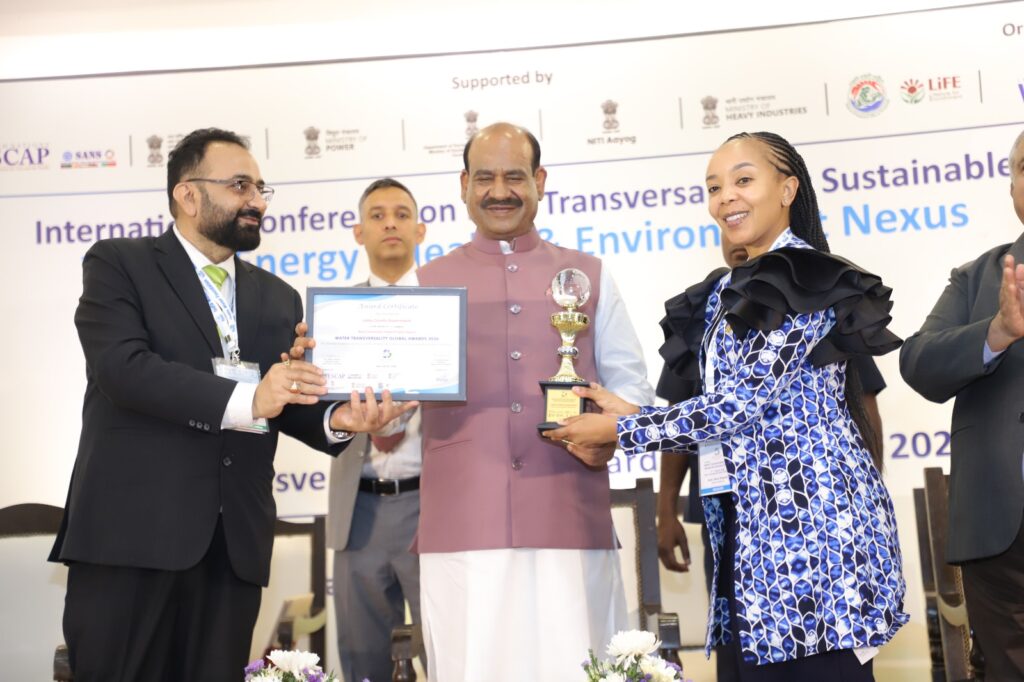
(Photo/Courtesy)
By The Coast Reporter
Email, thecoastnewspaper@gmail.com
Lamu County has received international recognition after winning the Best Community Impact Project Award at the Water Transversality Global Awards 2026 held in New Delhi, India.
The recognition celebrates an innovative initiative that uses water access as a platform for peacebuilding in a fragile coastal border region.
The award was organized by the India Water Foundation, a global authority on water governance and climate resilience with Special Consultative Status at the United Nations ECOSOC and UNOPS.
The award was received on behalf of Lamu County by ambassador Mary Mutuku, deputy head of mission at the Kenya Embassy in India.
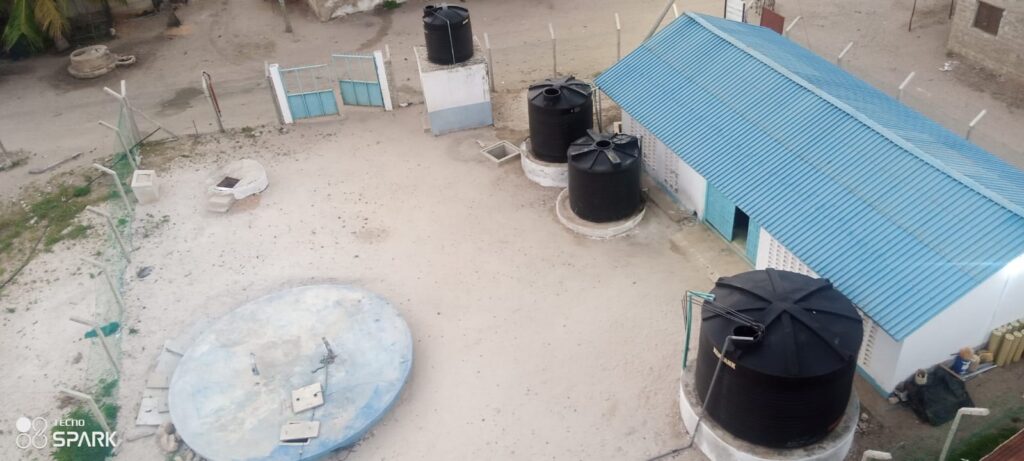
The recognition highlights the Kiunga Solar Desalination and Peace Initiative in Lamu County. The project converts saline groundwater drawn from wells into clean drinking water using solar-powered desalination technology.
Unlike conventional desalination systems that draw water directly from the sea, the Kiunga initiative utilizes previously unused underground saline water, transforming it into a sustainable source of clean water for communities in the region.
Beyond improving water access, the initiative introduced an inclusive water governance system designed to strengthen peace and cooperation among diverse communities living in Kiunga.
Through structured community dialogue facilitated by the county government, stakeholders agreed on a shared water rationing system.
The rationing framework brings together host communities, refugee populations, Somali cross-border communities, Boni internally displaced persons (IDPs), women, children, schools, and security agencies including the Kenya Defence Forces (KDF) under one transparent and equitable framework.
This shared system has transformed water from a potential source of conflict into a platform for cooperation and peacebuilding.
Community Voices on the Impact
Amina Mohamed – Refugee Community Member:
“Before the desalination plant was established, getting water was one of the hardest tasks in our daily life. As a refugee woman, I had to walk long distances looking for water, sometimes several times a day. It was exhausting and unsafe. Today we can access clean water closer to our homes. It has restored dignity for many families and made life easier for women like me.”
Abuu Bwana – Community Member Living with Disability:
“Living with a disability made it extremely difficult for me to travel long distances to fetch water. In the past I depended heavily on others to help me. With the desalination plant in Kiunga, water is now accessible within the community. This project has given people like me independence and improved our quality of life.”

Abdul Hassan – Student and Internally Displaced Person from Boni Forest:
“As a student displaced from Boni Forest and studying in Kiunga, I used to walk many kilometres looking for water before going to school. Sometimes I would arrive late or miss classes. Now water is available nearby and I can focus on my studies.”
Atik Mohamed – Community Elder:
“When the county government brought us together to discuss how water should be shared, people from different communities sat together and agreed on a fair rationing system. Today everyone understands when and how to access water. This agreement has reduced tension and helped bring peace among communities.”
Kenya Defence Forces Perspective:
A Kenya Defence Forces officer stationed in Kiunga noted that the initiative has strengthened trust between the community and security agencies.
“The shared water rationing system has strengthened trust between the community and security agencies. When resources are shared fairly, cooperation improves and insecurity reduces. This has helped strengthen stability in the area,” spoke on anonymity.
Leadership Behind the Initiative
The peacebuilding integration component of the initiative which made the project secure this innovative award was executed by Shee Kupi Shee, Director of Disaster Management and Peace Building under the Department of Public Service Management in Lamu County.
“This initiative demonstrates that access to water can become more than a basic SERVICE, it can become a bridge for peace by bringing communities together around a shared resource,” said Shee Kupi Shee.
The project was implemented under the guidance of Khadija Fumo, a Youthful Chief Officer for Public Service Management.
“This global recognition affirms the commitment of Lamu County to pursue innovative solutions that address water scarcity while strengthening resilience and social cohesion among our communities,” said Khadija Fumo.
The program was sanctioned by Abdulnasir Mohamed, Chief of Staff in the Governor’s Office, the county leadership quickly supported the initiative once the idea was presented.
“When the proposal to integrate peacebuilding into the Kiunga desalination initiative was presented, we immediately recognised its potential to deliver both water security and stability for our communities and moved quickly to support its implementation,” said Abdulnasir Mohamed.
A Model for Peace and Climate Resilience
The Kiunga initiative demonstrates how renewable energy water solutions combined with inclusive governance can transform scarce resources into platforms for cooperation, resilience and peace.
What was once unused underground saline water has now become a lifeline improving health, supporting education, strengthening trust between communities and security agencies, and weakening conditions that insecurity often exploits in fragile regions.
About The Author