Dropped My School Bag for Diapers Kilifi Young Mothers Recall
a child in diapers. (Photo/ Courtesy)
By Mbungu Harrison
Email, thecoastnewspaper@gmail.com
Faima Nzingo never imagined that her biggest homework assignment would come with nappies, midnight cries and a firewood bundle balanced on her head.
One moment she was in Class Seven worrying about exams; the next, she was worrying about how to feed a baby.
“I went to hospital and came back with news I didn’t expect, half-smiling.I was found to be pregnant. That’s how school ended,” she says.
In Kilifi County, Faima’s story is far from unique. Dozens of teenage mothers, some barely out of their teens, are now appealing to the county government and well-wishers for economic support, saying that while motherhood came early, life itself should not end there.
What should have been years of learning algebra and writing compositions quickly turned into lessons in survival.
With limited education and no stable income, Faima now earns a living selling charcoal and firewood hard work that barely pays enough but keeps hope alive.
“My dream of education died, but my child is alive. So I must live for both of us,” she says frankly.
She laughs softly, the kind of laugh that says life is hard, but I’m still standing.
That laughter returned more confidently after she attended a recent sensitisation forum organised by Zamara Foundation, where young mothers between 18 and 24 years were taken through sexual and reproductive health rights and, more importantly, reminded that motherhood is not a life sentence to poverty.
“For the first time, I realised it’s not the end of life.I can still start a business. I can still be happy,” she says.
Her appeal is simple: a little financial support to expand her small business and stand on her own feet.
Kadzo Munga (not her real name) knows stigma all too well.
When she got pregnant, whispers followed her faster than congratulations ever would.
“People judged me. But after sensitisation, I learnt that I can still be someone important in society,” she recalls.
Kadzo also sells firewood and charcoal and hopes for economic support to grow her venture. Like Faima, her education journey came to a halt, forcing her to depend on parents who are already struggling.
But acceptance, she says, has changed everything. “Now we are even telling other girls to speak up against sexual and gender-based violence. Silence helps nobody,” she adds.
Despite the odds, the young mothers are determined to raise their children with dignity and break the cycle of poverty.

“With the right support, I can become financially independent and contribute to society,” Kadzo says.
Zamara Foundation official Risper Kengere says stigma and harmful social norms remain the biggest barriers.
“These young mothers face many challenges,” she said. “We are creating safe spaces where they can talk freely and find solutions together,” she adds.
Since Zamara began operations in Kilifi, Risper says the impact is visible: girls are speaking up, reporting violations and reclaiming their confidence.
“There is progress, but gaps remain: education, health, economic empowerment and protection from SGBV must all go hand in hand,” she added.
She noted that cases of teenage pregnancy, GBV and child marriage once alarmingly high are gradually declining due to sustained advocacy and sensitisation.
As schools reopen their doors to young mothers, education stakeholders are urging that pregnancy should never mark the end of a girl’s academic journey.
Parents and guardians in Kilifi have been called upon to ensure teenage mothers are re-admitted to school to complete their education.
Zamara Foundation Executive Director Wamboi Kimani says although teenage pregnancy cases are slowly declining, Kilifi and Kwale counties still report worrying numbers.
Speaking during a Gumzo Darasani feedback meeting in Mombasa, Wamboi emphasised re-entry to school policies.
“Getting pregnant is not the end of life. Girls must be allowed to return to school and succeed,” she added.
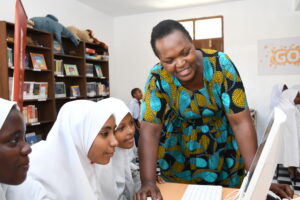
Through the Gumzo Darasani initiative, Zamara has reached more than 600 girls across 15 public schools in Kilifi and Kwale, empowering learners from Grade Seven upwards with sexuality education.
“The silence around sexual education is dangerous, We must talk to our children before life teaches them the hard way,” Wamboi said.
Teachers say the programme is working. Nancy Nyachoga of Mkwajuni Junior School in Kilifi reported zero teenage pregnancy cases since the project began.
“We are seeing girls excel academically. Parents must support these efforts,” she said,
Binthamisi Danda of Kiteje Junior and Primary School in Kwale added that girls are now more confident in reporting abuse.

“Teen pregnancies have reduced because girls know their rights,” she said, noting that poverty often pushes girls into early exploitation.
A recent survey still ranks Kilifi among counties with high teenage pregnancy rates—but for Faima, Kadzo and many others, statistics are no longer just numbers.
They are proof that help is needed and that change is possible.“I may have dropped my school bag,” Faima says.
About The Author