Legislative Betrayal at Sea: Kenya’s Hollow Law Leaves Abandoned Seafarers Adrift
By Andrew Mwangura
Email, thecoastnewspaper@gmail.com
Kenya’s Merchant Shipping Act of 2009 is a deeply compromised statute, failing spectacularly in its core duty to protect abandoned seafarers.
This failure is particularly acute for crews serving on Kenyan-flagged fishing vessels, and increasingly, on merchant ships.
Enacted with promises to modernise maritime governance and align with international labour standards, the Act’s inability to decisively address abandonment reveals a legislative hollowness with devastating human consequences.
In practice, the law is toothless where it matters most: at the critical intersection of flag State responsibility, labour protection, and enforcement.
At the core of this failure is the Act’s narrow and outdated definition of who qualifies as a ‘seafarer’ and which vessels deserve full statutory protection.
Drafted primarily for traditional merchant shipping, the statute awkwardly marginalises fishing vessels and their crews. While Kenyan-registered fishing vessels fall under the Act for registration and flag State oversight, the labour protections for their crews remain incomplete, indirect, and largely aspirational.
This has created a discriminatory two-tier system: abandonment on a merchant ship may trigger a statutory response, while abandonment on a fishing vessel dissolves into bureaucratic ambiguity.
Sections 135 and 194 of the Act crystallise this imbalance. These provisions impose employer obligations for relief, maintenance, repatriation, and wage payment in cases of abandonment, shipwreck, or stranding.
Yet, their language is firmly anchored in the merchant shipping context, stopping short of explicitly extending equivalent protections to fishers. There is no dedicated framework for abandonment on fishing vessels, no mandatory financial security mechanisms, and no clear enforcement pathway when an owner disappears.
Consequently, abandoned fishers exist in a legal vacuum, dependent on ad-hoc administrative goodwill rather than enforceable rights.
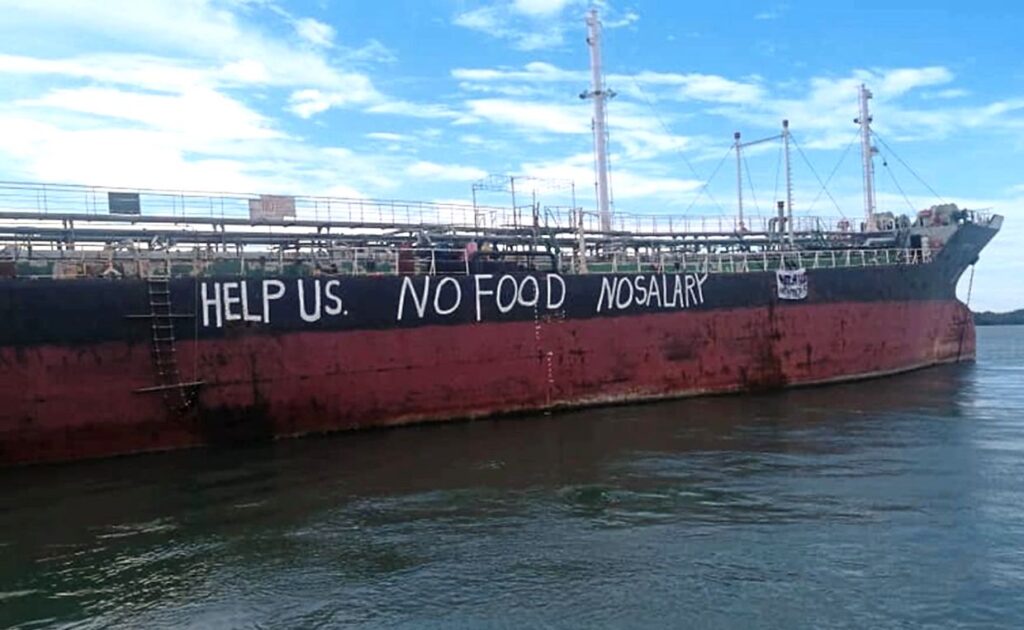
This gap is not merely theoretical. Kenyan ports and anchorages have repeatedly been scenes of crisis, with crews on Kenyan-flagged fishing vessels left unpaid for months, lacking food, medical care, or means to return home.
In such cases, the Kenya Maritime Authority often intervenes not because the Act compels it with clarity and force, but because general flag State obligations and humanitarian imperatives leave little alternative.
The absence of clear statutory triggers renders accountability slow, fragmented, and ineffective—a weakness readily exploited by shipowners who face minimal legal or financial consequences.
Kenya’s 2022 ratification of the ILO Work in Fishing Convention (C188) was a welcome corrective step, but it has not cured the Merchant Shipping Act’s structural deficiencies.

While C188 provides explicit protections against abandonment and mandates repatriation rights and enforcement regimes, its domestic implementation has been channelled through the separate Fisheries Management and Development Act of 2016.
This creates a fragmented legal architecture, poorly harmonised with maritime law, which weakens enforcement and allows institutional actors to deflect responsibility between maritime and fisheries authorities.
The result is a system where Kenya, as a flag State, exercises control over vessels without fully assuming responsibility for the people who work on them. This contradiction erodes Kenya’s credibility in international maritime governance and betrays the essence of flag State obligations under international law.
A flag is not merely a commercial convenience; it is a legal bond carrying profound duties, foremost among them the protection of human life and dignity at sea.
What emerges is a Merchant Shipping Act that speaks loudly of registrations registrations with abandonment and exploitation. Its silence on fishing vessels is not accidental; it reflects an archaic legislative mindset that treats fishers as peripheral to maritime labour justice.
To end this betrayal and fulfil Kenya’s obligations, decisive and coordinated action is required. The following measures are not merely recommendations but urgent necessities.
First, Parliament must urgently amend the Merchant Shipping Act to explicitly include fishers within the definition of ‘seafarers’ for all labour protections, especially abandonment.
This is the foundational step. Second, the Act must mandate compulsory financial security for all Kenyan-flagged vessels to cover wages and repatriation in abandonment cases, creating a victim-funded safety net.
Third, a new, standalone section must establish unambiguous statutory duties and timelines for the Kenya Maritime Authority, with a clear enforcement pathway.
Furthermore, a formal legislative process must harmonise the Merchant Shipping Act with the Fisheries Management and Development Act to create a unified enforcement regime, eliminating institutional buck-passing.
Pending full reform, the government should establish an emergency Seafarers’ Welfare & Crisis Fund to provide immediate humanitarian aid.
Finally, Kenya must invest in robust port State control inspections targeting labour conditions on fishing vessels and deny its flag to vessels with repeated abandonment histories.

Until these steps are taken, abandonment will remain a recurring shame in Kenya’s maritime landscape. In its current form, the Merchant Shipping Act of 2009 offers regulation without protection and oversight without accountability.
For the abandoned seafarer and fisher, it is not merely an inadequate law—it is a betrayal codified in statute. Kenya must choose whether its flag will symbolise exploitation or the rigorous defence of human dignity at sea.
Andrew Mwangura is an independent maritime consultant and former Secretary General of the Seafarers Union of Kenya (SUK).
About The Author