Kilifi Young Mothers Appeal for Economic Support After Dropping Out of School
By Mbungu Harrison
Email, thecoastnewspaper@gmail.com
Kilifi teenage mothers are appealing to the county government, development partners, and well-wishers to support by with alternative economic ventures to enable them to raise their children and attain financial independence.
The young women, aged between 18 and 24, say many of them were forced to drop out of school after getting pregnant, a situation that drastically altered their lives and limited their opportunities.
They argue that targeted economic empowerment and access to education can help them rebuild their lives and secure a better future for their children.
One such case is that of Faima Nzingo, who became pregnant while in Class Seven and was compelled to abandon her education.
“What should have been a time of learning and growth turned into a struggle for survival,” she said.
With limited education and no stable source of income, Faima now relies on selling firewood and charcoal to support her child. She says the business barely meets their daily needs.
“I was in school, in Class Seven. When I went to the hospital, I was found to be pregnant and was forced to drop out to take care of my child,” she narrated.
Faima says her dreams of becoming a professional were cut short by early pregnancy, forcing her into informal work to survive.
However, her outlook began to change after attending a sensitisation forum organised by Zamara Foundation, which focuses on empowering young mothers and girls.
“After the training, I understood that life does not end because of pregnancy. I can still start a business, raise my child well, and be happy,” she said, adding that she now hopes to expand her small business with financial support from well-wishers.
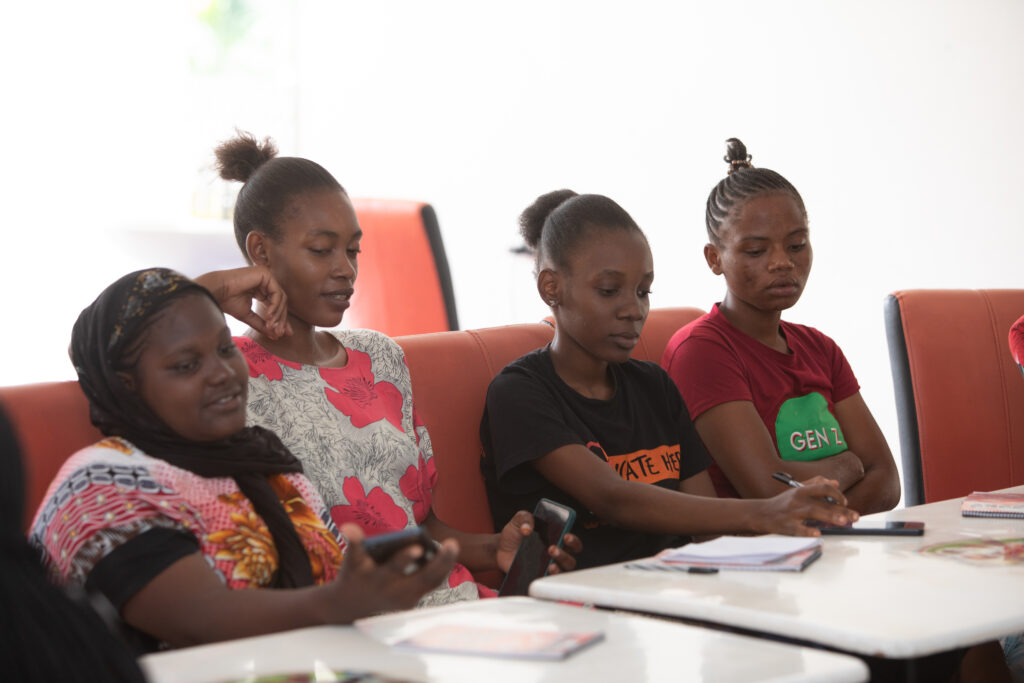
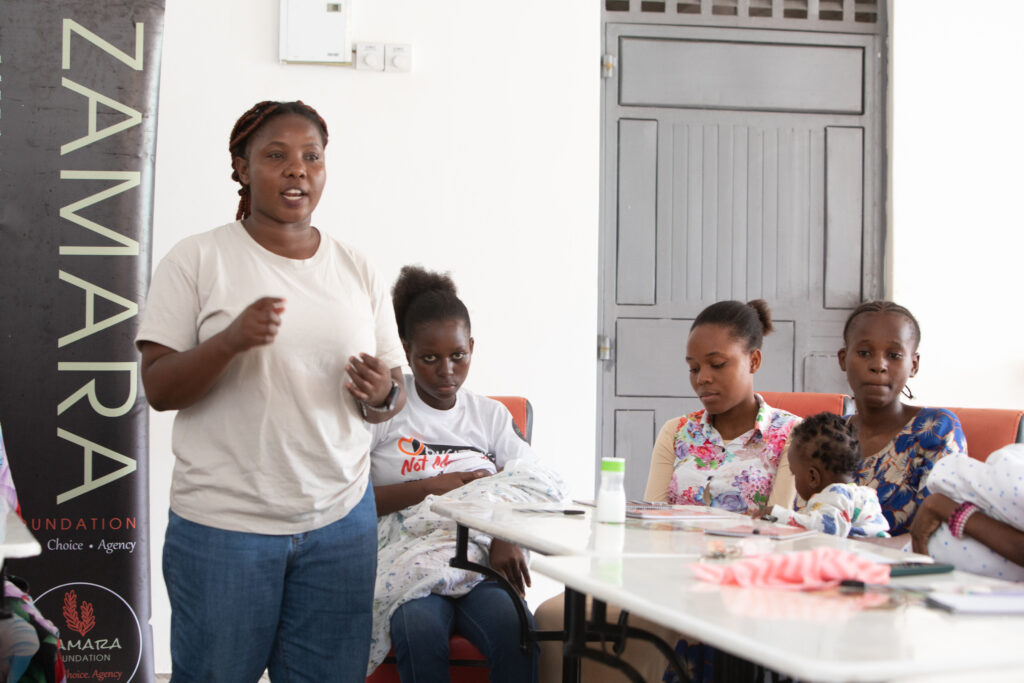
The young mothers were speaking during a sensitisation meeting convened by Zamara Foundation to educate them on sexual and reproductive health rights and economic empowerment.
Another participant, Kadzo Munga (not her real name), also appealed for support to boost her small business and improve her livelihood.
Like many others, she dropped out of school after becoming pregnant and now depends heavily on her struggling parents.
“When I got pregnant, I was condemned by society. But after the sensitisation, I have learnt that I can still become someone important in society,” she said.
Kadzo, who also sells firewood and charcoal, believes that with proper financial support, her business could grow and provide a stable income.
“Giving birth at a tender age is not the end of life. With support, I can expand my business and live a meaningful life,” she added.
The young mothers also urged girls to speak out against sexual and gender-based violence (SGBV), which they say is a major contributor to teenage pregnancies in the region.
Despite the challenges, the women expressed determination to raise their children with dignity and break the cycle of poverty.
“With the right support, I believe I can become financially independent and contribute positively to society. Investing in young mothers is not just helping an individual, but securing a better future for the next generation,” one of them said.
Zamara Foundation official Risper Kengere said the organisation is championing girl-child rights and fighting sexual and gender-based violence in Kilifi County.
“These young mothers face many challenges. As an organisation, we ensure there is a safe space where they can talk openly about the issues affecting them,” Kengere said.
She noted that stigma and harmful societal norms remain major obstacles but said progress is being made through sustained advocacy.
“Since Zamara began working in Kilifi, we are seeing a positive impact. Girls can now speak up against violations of their rights and mould themselves into meaningful members of society,” she added.
Ms Kengere said although the government has made efforts to address teenage pregnancy and SGBV, gaps still exist in education access, healthcare, economic empowerment, and child protection.
She cited statistics indicating high rates of teenage pregnancy, gender-based violence, and child marriage in Kilifi County, though the numbers are gradually declining due to sensitisation campaigns.
Zamara Foundation Executive Director Wamboi Kimani called on education stakeholders to ensure that pregnancy does not mark the end of a girl’s academic journey.
“Getting pregnant is not the end of life. We are advocating for the full implementation of the re-entry policy to allow young mothers to return to school,” Kimani said this during a Gumzo Darasani programme feedback meeting in Mombasa.
She said the initiative has so far reached more than 600 girls in 15 public schools across Kilifi and Kwale counties and will be expanded to reach more learners.
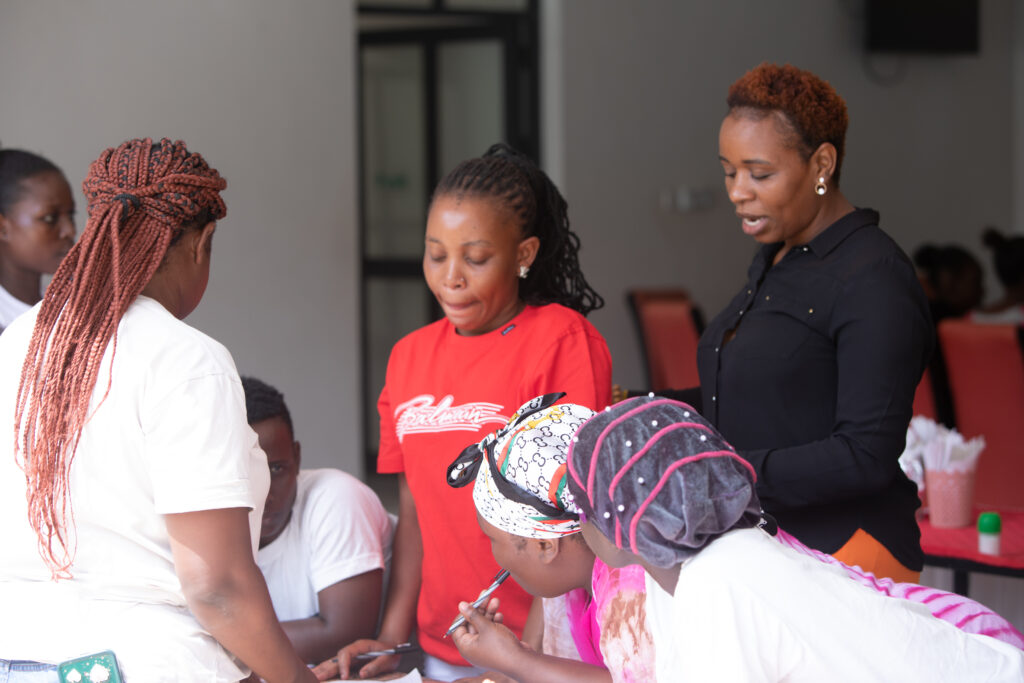
Teachers attending the meeting reported reduced cases of teenage pregnancy in schools participating in the programme, attributing the success to sexuality education and open dialogue.
Despite sustained interventions, a recent survey by a local daily shows Kilifi County still leads in teenage pregnancy cases nationally, highlighting the need for continued collaboration among government agencies, communities, and civil society organisations.
About The Author