Industry, Regulation and the Quiet Power of Engagement

Kenya Maritime Authority (KMA), DG CPA Omae Nyarandi (Photo/courtesy)
By Andrew Mwangura
Email, thecoastnewspaper@gmail.com
The courtesy call by Hapag-Lloyd Kenya Ltd’s leadership to the Kenya Maritime Authority (KMA) may not have made loud headlines, but it spoke volumes about the direction Kenya’s maritime sector must take if it is to mature, compete and sustain growth.
Led by the country manager and area managing director, the visit to KMA—hosted by director general CPA Omae Nyarandi—was a reminder that progress in shipping is rarely driven by infrastructure alone.
It is shaped just as much by dialogue, regulatory clarity and mutual trust between operators and authorities.
In an era where global shipping faces pressure from volatile freight markets, tightening environmental rules and geopolitical disruptions, the relationship between regulators and shipping lines has become more important than ever.
Kenya sits at a strategic crossroads of the Western Indian Ocean, serving not only its own economy but also a vast hinterland across East and Central Africa.
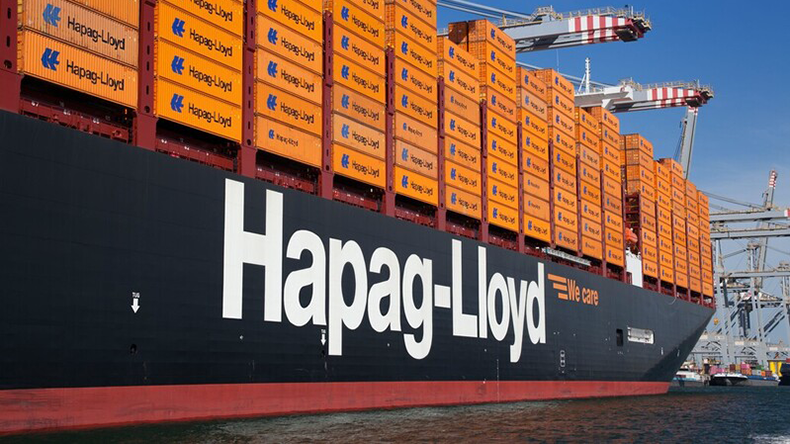
For shipping lines like Hapag-Lloyd, Kenya is not just a port of call; it is a gateway market whose efficiency, predictability and governance directly affect regional trade flows.
The engagement with KMA offered an opportunity to reaffirm the Authority’s mandate within the maritime and shipping industry.
KMA’s role as regulator, safety overseer and custodian of Kenya’s maritime obligations under international conventions places it at the center of sector stability. When a major global carrier takes time to engage at this level, it signals recognition that strong regulation is not an obstacle to business, but a foundation for it.
Predictable rules, consistent enforcement and open channels of communication reduce risk for operators and enhance Kenya’s attractiveness as a maritime hub.

Such meetings also highlight the evolving nature of maritime governance. Modern regulators are no longer distant rule-enforcers operating in isolation.
They are increasingly expected to be facilitators, working with industry to interpret global standards, manage transitions and support compliance without compromising safety or national interest.
The discussions on potential areas of collaboration suggest an appreciation on both sides that regulation and commerce are interdependent.
Shipping lines depend on credible authorities to uphold standards, while authorities rely on industry cooperation to achieve policy objectives.
For Kenya, this engagement carries broader significance. The country has invested heavily in port infrastructure, most notably at Mombasa, with the aim of positioning itself as a regional logistics powerhouse. Yet infrastructure gains can be undermined if regulatory systems lag behind industry realities.
Engagements such as this one help bridge that gap. They allow regulators to better understand operational challenges faced by carriers, and enable operators to align their business practices with national priorities, including safety, environmental protection and local capacity development.
The presence of senior regional leadership from Hapag-Lloyd is also telling. It reflects confidence in Kenya as a long-term market and an acknowledgment of KMA as a serious institutional partner.
For a global liner company, reputational risk is as critical as operational efficiency.
Engaging proactively with the national maritime authority sends a message that compliance, transparency and partnership are integral to doing business in Kenya.
There is also an unspoken but important human dimension. Maritime regulation ultimately affects people: seafarers, port workers, maritime professionals and the wider communities that depend on shipping for livelihoods.
When regulators and operators align, the benefits filter down in the form of safer ships, better working conditions and more reliable supply chains.
While such outcomes may not be discussed explicitly in courtesy calls, they remain the underlying stakes.
Critically, this kind of engagement should not be a one-off. Kenya’s maritime sector would benefit from more structured and sustained interaction between KMA and industry players, both local and international.
Regular dialogue can help anticipate regulatory changes, manage emerging risks such as decarbonization requirements, and ensure that Kenya’s maritime framework evolves in step with global trends rather than reacting belatedly to them.
At a time when Africa is often portrayed as a peripheral player in global shipping, moments like these quietly challenge that narrative.
They demonstrate that African maritime institutions can engage confidently with leading global operators on matters of substance.
They also reinforce the idea that Kenya’s maritime future will be shaped not just by cranes, berths and vessels, but by the quality of its institutions and the relationships they cultivate.
In the final analysis, the Hapag-Lloyd–KMA meeting was less about ceremony and more about intent. It reflected a shared understanding that sustainable maritime growth is built on cooperation between regulator and industry.
For Kenya, nurturing such relationships may well prove as valuable as any physical investment in securing its place on the global shipping map.
Mr. Mwangura, an independent maritime consultant, is former SUK Secretary General
About The Author