Safety at Sea Must Include Dignity: Why Kenya’s New STCW PSSR Amendments Matter
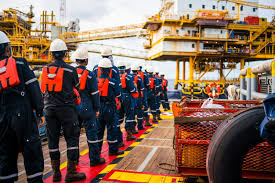
Anti Harassments mandatory training for seafarers. (Photo/ Courtesy)
By Andrew Mwangura
Email, thecoastnewspaper@gmail.com
The recent directive from the Kenya Maritime Authority (KMA) to implement amendments to the STCW Code on Personal Safety and Social Responsibilities (PSSR) training marks a pivotal moment for seafarer welfare in Kenya.
While framed as a technical update, this move represents a profound and overdue shift: it acknowledges that true safety at sea encompasses not just physical hazards, but also the dignity and psychological security of every crew member.
For too long, maritime safety regulations have focused narrowly on operational risks—fire, abandonment, personal injury—while overlooking the pervasive social harms of violence, harassment, bullying, and sexual assault.
This silence has been most damaging to junior crew, cadets, women, and migrant seafarers, who often navigate rigid onboard hierarchies where abuse can go unchecked.
By integrating mandatory training on prevention and response into the PSSR curriculum, Kenya aligns with global standards set by the International Maritime Organization (IMO) and affirms a critical principle: safety is inseparable from social responsibility.
This regulatory step deserves recognition not merely as compliance, but as a statement of values. It signals that Kenya considers the protection of seafarers’ fundamental rights as integral to maritime governance as technical proficiency.
An unsafe social environment is now rightfully understood as a direct threat to operational safety, crew well-being, and overall vessel performance.

Yet, the real measure of this policy will lie in its execution. Introducing three additional training hours on these sensitive topics is a start, but it must not become a token exercise.
Superficial, checkbox training will fail to change onboard culture. The KMA must enforce rigorous standards for curriculum design, instructor competency, and practical assessment to ensure this training resonates in the complex reality of shipboard life.
Implementation also brings practical challenges, particularly for seafarers holding existing PSSR certificates who must now complete an upgrading course. While education on these new competencies is essential, we must guard against placing undue burden on seafarers themselves.
Many work on short contracts or are stationed overseas, with limited means to absorb new costs or travel for training at short notice.
Without flexible scheduling, reasonable pricing, and—critically—employer support in covering costs and granting leave, this well-intentioned upgrade could become a barrier to employment in an already competitive and insecure job market.
The KMA notice correctly outlines a shared responsibility across the maritime sector: training institutions must update programs, shipowners must facilitate crew upgrades, and seafarers are encouraged to plan ahead.
However, in an industry with inherent power imbalances, seafarers often hold the least influence. “Proactive planning” is only possible if employers actively cooperate.
The KMA must therefore exercise vigilant oversight to ensure responsibility does not fall disproportionately on individual seafarers, and that shipowners and managers fulfill their obligations.
Beyond compliance, these amendments offer Kenya a strategic opportunity. As the nation positions itself as a regional maritime hub, its commitment to seafarer welfare will shape its international reputation.
A workforce trained not only in survival skills but also in ethics, conflict resolution, and respectful communication enhances safety, reduces legal and reputational risks, and attracts quality shipping partners.
This is not a regulatory burden, but an investment in a professional, modern maritime industry.
At its core, this regulatory change recognizes that violence and harassment are systemic risks, not peripheral issues. By embedding social responsibility into mandatory safety training, Kenya is declaring that shipboard culture matters profoundly.
The journey, however, is just beginning. To move from paper to practice, implementation must be carried out with seriousness, transparency, and a genuine sensitivity to seafarers’ lived experiences.
If done well, these PSSR amendments can help build safer ships, fairer workplaces, and a maritime industry that truly honours the principle that safety at sea begins with respect for the human being.
Mwangura is an independent maritime consultant and former Secretary General of the Seafarers Union of Kenya (SUK)
About The Author