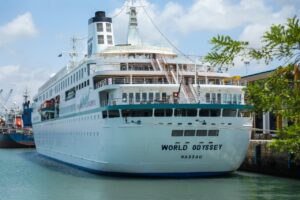
Kenya’s Boat-Building Quest: Anchoring Aspiration in Industrial Reality
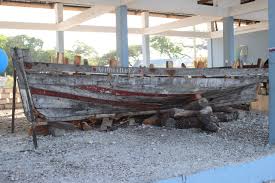
Boat building heritage. (Photo/ Courtesy)
By Andrew Mwangura
Email, thecoastnewspaper@gmail.com
Kenya’s renewed push to establish a viable boat-building and ship repair industry is more than an industrial ambition—it is a long-overdue reckoning with its own maritime identity.
For decades, the nation has embodied a striking paradox: a coastal state strategically positioned in the Western Indian Ocean, yet one that remains a consumer, not a creator, of maritime assets.
From patrol boats and ferries to fishing trawlers and offshore support vessels, nearly every craft in Kenyan waters is conceived, constructed, and maintained abroad.
Establishing a domestic boat-building industry is, therefore, a fundamental step toward reclaiming agency over the blue economy and grounding maritime growth in homegrown industrial capability.
Boat building is not merely about assembling hulls and engines. It is about forging a resilient industrial ecosystem that interlinks skills development, advanced manufacturing, research, logistics, and national security.
Each locally built vessel generates skilled employment for welders, naval architects, marine engineers, electricians, and artisans. It stimulates demand for steel, aluminum, composites, engines, and electronics, pulling multiple economic sectors into a single, dynamic value chain.
In a nation grappling with chronic youth unemployment, a rooted boat-building sector offers precisely the kind of technical, high-value employment that cannot be outsourced.
Kenya is not starting from scratch. The Port of Mombasa stands as East Africa’s premier maritime gateway, serving a vast hinterland that includes Uganda, Rwanda, South Sudan, and beyond.
The country boasts an expanding network of technical training institutions, a growing cadre of internationally certified seafarers, and increasing political recognition of the blue economy as a critical growth pillar.
Recent investments in port infrastructure, shipyard facilities, and dry-docking capacity signal a budding awareness that maritime value must extend beyond cargo handling into the realms of production and specialized services.
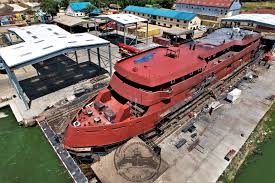
Yet, the perennial challenge has never been a lack of potential—it has been a deficit of sustained, disciplined execution. Boat building is an endeavor of patience and consistency, impervious to quick wins or ceremonial launches.
Global leaders in this field, from Europe to Asia, cultivated their industries through decades of deliberate policy: strategic government support, guaranteed domestic orders, technology transfer partnerships, and uncompromising quality standards.
Kenya must approach this venture not as a prestige project, but as a strategic national industry deserving of protection, accountability, and long-term commitment.
The compelling case for domestic production is anchored in concrete demand. Kenya’s fisheries sector requires modern vessels to sustainably harness offshore stocks.
The Kenya Coast Guard Service, Navy, and port authorities need patrol and support craft designed for local operating conditions. Tourism depends on reliable ferries and leisure boats.
Emerging sectors like offshore energy and subsea cable maintenance will increasingly demand specialized support vessels. Aggregated, these needs form a stable demand base capable of sustaining a local industry—provided procurement policies consciously favor domestic capability without sacrificing safety or quality.
The strategic imperative is equally powerful. A nation that cannot build or maintain its own maritime assets remains perpetually vulnerable. As maritime security threats, illegal fishing, and environmental crises intensify, local boat building enhances self-reliance.
It slashes repair timelines, conserves foreign exchange, and ensures vessels are designed with an intimate understanding of local waters, weather, and port constraints.
Furthermore, it solidifies Kenya’s position as a regional maritime hub, potentially drawing neighboring states to its yards for construction, repair, and refit.
Ambition, however, must be guided by realism. Success will not come from challenging global shipbuilding titans head-on.
The prudent path lies in strategic specialization: mastering the construction of small to medium-sized vessels—aluminum-hulled patrol boats, passenger ferries, fishing craft, and versatile workboats suited for coastal and inland waterways.
Through phased growth, targeted technology partnerships, and rigorous international certification, Kenya can ascend the value chain while building a reputation for safety, quality, and reliability.
Ultimately, Kenya’s boat-building quest tests a deeper national resolve: to reimagine its ports as engines of production, not just points of transit, and to truly embrace the sea as a site of industry.
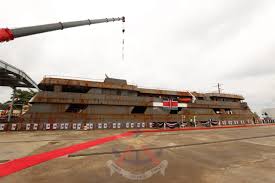
It will demand unwavering political will, private sector courage, and institutional discipline. If pursued with seriousness and strategic focus, this venture can become a cornerstone of Kenya’s blue economy—transforming maritime aspiration into tangible industrial reality.
The goal is clear: to ensure that the vessels plying Kenyan waters increasingly bear the imprint of Kenyan hands, Kenyan skill, and Kenyan vision.
Mr. Mwangura, an independent maritime consultant is former SUK Secretary General
About The Author