Activists Call on Government Agencies to Heighten War on GBV

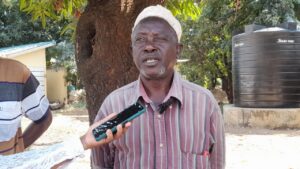
Nekesa Wandera speaks to the media at Mtwapa Kilifi County. (Photo By Mbungu Harrison).
By Mbungu Harrison
Email, thecoastnewspaper@gmail.com
Activists have called on government agencies to heighten the fight against gender-based violence (GBV) urging stronger reporting systems, faster access to justice and deeper community engagement to protect survivors across the country.
Speaking during a GBV media workshop in Mtwapa, campaigners said the government must work more closely with civil society and the media to address persistent cultural, economic and institutional barriers that continue to fuel violence.
They warned that many GBV cases still go unreported, with survivors both women and men often silenced by fear, stigma, economic dependence or slow court processes.
Activists noted that even newer forms of violence such as digital and cyber-enabled abuse remain largely invisible because victims are unsure of where to report or whether they will be taken seriously.
This underreporting, they said, continues to undermine efforts to strengthen accountability and ensure justice for vulnerable groups.
Nekesa Wandera, who works with Pema Kenya under the Hamasisha Dada initiative, said their work across Kilifi and Kwale counties has revealed widespread silence around abuse.
The Hamasisha Dada programme, launched in 2023 and concluding this December, focuses on economic empowerment, sexual and reproductive health and other challenges facing rural women.
It will culminate in activities marking the International Women Human Rights Defenders Day and International Human Rights Day on December 10, 2025.

Wandera noted that despite extensive outreach, significant numbers of survivors still do not come forward.
“Many GBV cases are never reported, whether by women or anyone else,” she said.
She urged men to break the silence as well, saying violence affects people of all genders.
“Violence against anyone is wrong. Men rarely report these cases, even at the national level. I encourage all men if you experience abuse, you are a human being and you should report it,” she added.
“Court processes take too long, and that discourages survivors from pursuing justice. Even when someone reports, there is often no follow-up. When you look at digital or cyber-crime data, very few cases are reported.”
Perisila Oluoch from Anganza said the media plays a key role in shaping the public’s understanding of GBV and ensuring survivors receive accurate information.
“People rely on the media for information. We wanted to meet with media personalities so that when they talk about GBV, they share complete and accurate information,” she said.
Oluoch added that harmful cultural norms, power imbalances and economic dependence continue to expose women and girls to higher risks of abuse.
“Power imbalance is a major factor when someone has power over another person, they may misuse it to cause harm. Women are more vulnerable because many depend economically on men, which makes it easier for them to be abused,” she said.
She also noted that men and boys often struggle in silence due to stigma and fear of ridicule.

“Society has taught men to stay quiet when they are abused because they fear how they will be judged at the police station. But we encourage men and boys to speak out. If you cannot go to the police, there are organisations that can support you and help you get justice,” she said.
The activists reiterated the need for stronger collaboration between government agencies, the media and civil society to ensure survivors whether women, men or children can safely report abuse, receive support and access justice without fear or discrimination.
About The Author