KNCHR, Journalists in Mombasa Call for Stronger Action to Defend Media Freedom
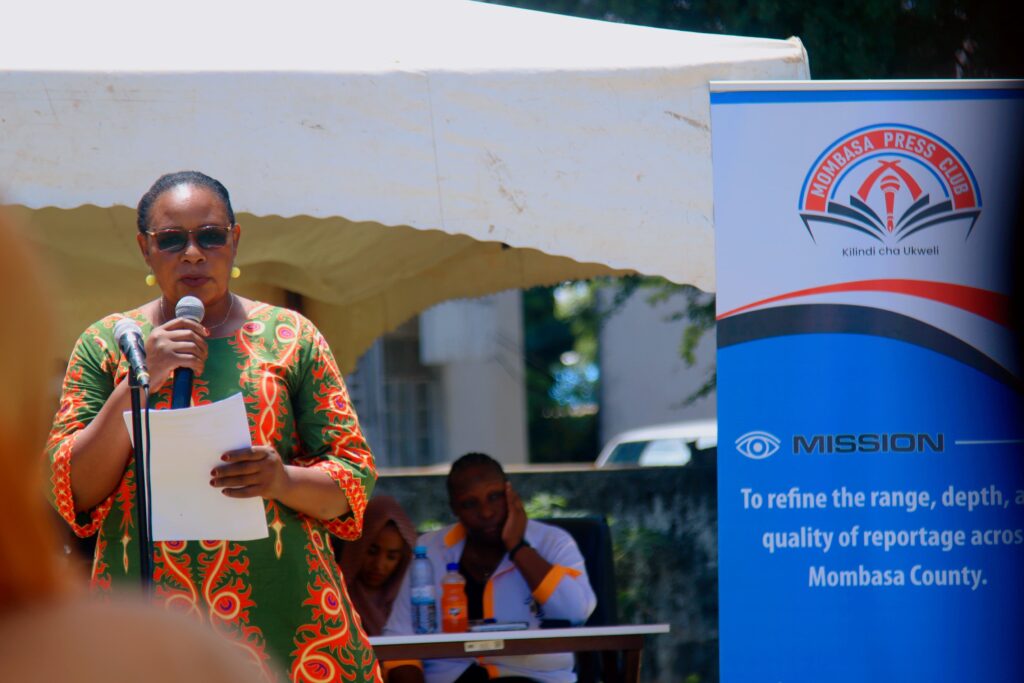
Brenda Dosio, the Coast Regional Coordinator for the Kenya National Commission on Human Rights (KNCHR) in Mombasa. (Photo By Johannah Akilinyingi)
By Mbungu Harrison
Email, thecoastnewspaper@gmail.com
Calls to end attacks on journalists and defend media freedom dominated commemorations in Mombasa on Monday as journalists, human rights defenders, and government officials marked the International Day to End Impunity for Crimes against Journalists.
Brenda Dosio, the Coast Regional Coordinator for the Kenya National Commission on Human Rights (KNCHR), praised journalists for their courage and resilience in exposing the truth despite growing intimidation and harassment.
She described journalists as “human rights defenders” whose work empowers citizens and strengthens democracy.
“When a journalist is silenced, justice is denied, and when a journalist is harmed, society loses a vital voice,” she said.
Dosio raised concern over the growing trend of online harassment targeting women journalists, warning that technology are increasingly being used to silence female voices.
She said women journalists face cyberbullying, deepfakes, and threats meant to discredit or intimidate them, adding that such attacks undermine democracy.
“This is not just a gender issue; it is a threat to democracy itself,” she noted. Dosio urged the media and human rights institutions to work closely in documenting violations, offering legal support, and ensuring that perpetrators of violence against journalists are held accountable.
Human rights organizations including Muslims for Human Rights (MUHURI), Haki Yetu, and Human Rights Agenda (HURIA) joined the commemoration, calling for an end to impunity.
Munira Ali of Haki Yetu said that crimes against journalists have a chilling effect on press freedom and weaken the ability of the media to hold leaders accountable.
Mombasa Press Club Chairperson Omar Shungu urged the government to fully enforce existing laws protecting journalists, saying that while Kenya has made progress in establishing a legal framework for press freedom, enforcement remains the biggest challenge.
Participants also cited recent incidents of harassment against journalists, including the detention of Shaaban Shoka, a journalist from Vanga in Kwale County, who was briefly held in Tanzania while covering elections.
Veteran journalists Elkana Jacob, Charles Mghenyi, and Abdulswamad Ali encouraged unity and professionalism within the media fraternity, urging journalists to remain ethical, objective, and fearless in pursuit of truth.
“A journalist is a guardian of truth. You must remain ethical, objective, and fearless in holding leaders accountable,” said Ali.
The Kenya National Commission on Human Rights pledged to continue documenting threats and attacks on journalists in its annual State of Human Rights Report.
Dosio noted that during the 2024 demonstrations, the Commission recorded 24 cases of violence against journalists, calling on the government to act decisively.
“We continue to witness cruel and inhumane treatment of individuals, which is worsened by the increasing attacks on journalists. The government must act decisively to protect freedom of the press and the safety of those reporting on critical issues,”she added.
KNCHR’s recent report, “The Right to Defend Rights: An Assessment of the Protection of Human Rights Defenders in Kenya (2020–2022),” also raised concern over growing censorship and misuse of regulatory power in Kenya’s media and online spaces despite strong constitutional guarantees for freedom of expression.
Dosio concluded by outlining key steps to strengthen media freedom, including faster prosecution of crimes against journalists, enhanced collaboration between media and human rights groups, investment in safety and digital security training, and public awareness campaigns on the importance of a free press.
“Appreciation alone is not enough we must act. Together, let us build a culture of human rights where journalists thrive and truth prevails,” she said.
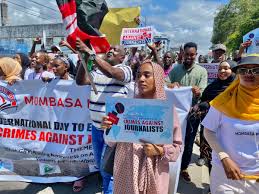
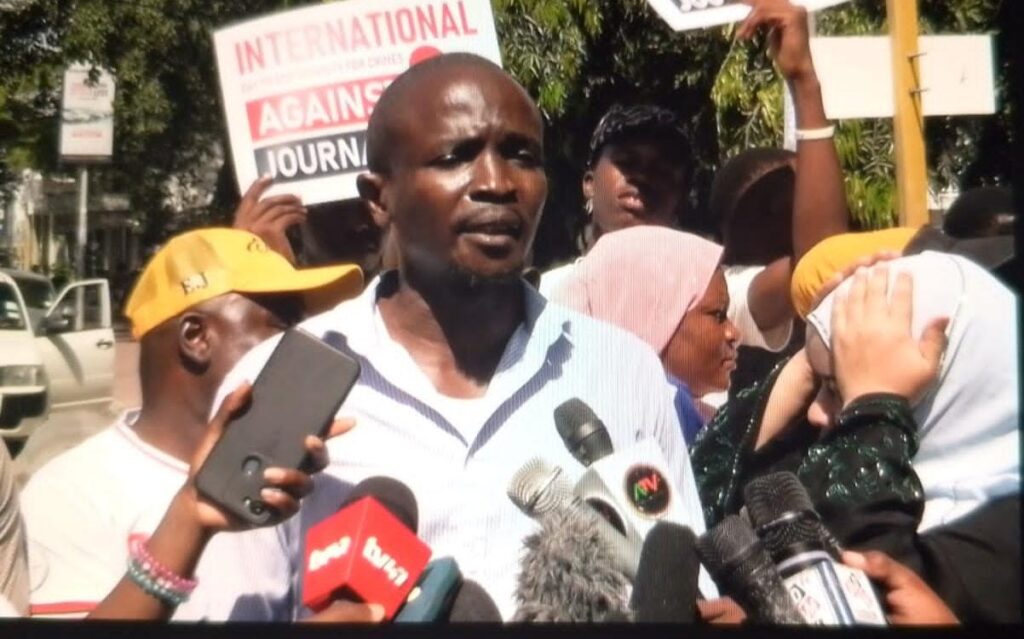
The event, which began with a peaceful march from Uhuru Gardens to the Little Theatre, brought together over 300 participants under the theme “Chat GBV: Raising Awareness on Technology-Facilitated Gender-Based Violence Against Women Journalists.
Participants waved placards and chanted messages calling for justice, protection, and accountability for media workers who face threats in their line of duty.
About The Author