Charting a New Course: Dr. Eric Katana Steers Bandari Maritime Academy Toward Excellence

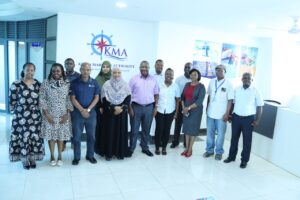
Bandari Maritime Cadets. (Photo/ Courtesy)
By Andrew Mwangura
Email, thecoastnewspaper@gmail.com
From Classroom to Deck: BMA Sets Sail on a New Era of Maritime Excellence
Under Dr. Eric Katana, Bandari Maritime Academy is transforming from a classroom-focused institution into a powerhouse of sea-ready maritime professionals, closing training gaps and forging global industry partnerships. Once facing a backlog of cadets awaiting essential sea experience, the academy is now charting a clear course toward operational efficiency, stronger industry ties, and the production of graduates fully prepared for the global maritime sector. With vision, strategic planning, and decisive action, Dr. Katana and his team are proving that BMA is not only keeping pace with the demands of modern maritime education but setting new standards in the region.
When Dr. Katana assumed leadership, he inherited a cohort of approximately 109 students who had successfully completed their classroom-based maritime studies but had yet to undergo Sea Guided Training—a crucial requirement for professional certification and employment in the global shipping industry. The absence of practical shipboard experience among such a large group posed both a logistical and reputational challenge for the academy. Addressing this backlog required immediate, decisive action to ensure that these cadets could gain the necessary exposure without compromising the quality of training or the academy’s standing in the maritime sector.
Under Dr. Katana’s direction, the academy launched a concerted effort to facilitate placements for these students, leveraging both existing industry partnerships and new relationships cultivated under his leadership. This strategic approach has already borne fruit. Through meticulous coordination, persistent advocacy, and proactive engagement with shipping companies, the team has successfully reduced the number of students awaiting Sea Guided Training from 109 to fewer than 50. This achievement reflects not only effective management but also a commitment to ensuring that each cadet has a clear and attainable pathway to completing their training and entering the maritime workforce as fully competent professionals.
Central to this progress has been the academy’s strengthened ties with key international shipping operators. BMA has successfully inked shipboard training agreements with major players in the industry, including Orion Bulkers, Wilhelmsen Ship Management, Maersk, and CMA CGM. These partnerships are significant on multiple levels. They provide BMA cadets with exposure to diverse shipping operations, modern vessels, and internationally recognized standards of maritime practice. They also signal to the global shipping community that Bandari Maritime Academy is a reliable source of well-trained, competent seafarers ready to meet the operational and safety demands of the industry. For cadets, these placements offer invaluable opportunities to gain firsthand experience, understand the complexities of shipboard operations, and develop the confidence necessary to perform effectively in high-stakes environments.

Dr. Katana’s approach emphasizes a balance between rigorous academic preparation and practical experience. By ensuring that students complete their Sea Guided Training efficiently, the academy is reinforcing its commitment to producing graduates who are not only theoretically knowledgeable but also skilled in real-world maritime operations. This alignment of classroom instruction with hands-on training is crucial for maintaining the credibility of the academy and for supporting Kenya’s broader ambitions as a regional maritime hub. Moreover, it highlights a forward-looking philosophy that views maritime education as an integrated continuum rather than a series of disconnected steps.
Looking ahead, BMA is preparing to send an additional batch of 30 cadets to complete shipboard training over the next three months. This next phase reflects a clear vision for continuous progress and a systematic approach to training management. Rather than allowing gaps to accumulate, Dr. Katana’s administration has prioritized careful scheduling, proactive industry engagement, and close monitoring of student progress. The result is a training pipeline that is increasingly efficient, transparent, and aligned with international maritime standards, ensuring that cadets gain both competence and confidence before joining the professional workforce.
Beyond the immediate logistics of student training, the academy under Dr. Katana is cultivating a culture of excellence and accountability. By addressing long-standing bottlenecks in sea placement and forging robust industry relationships, the leadership team is setting a tone that emphasizes professionalism, competence, and the importance of timely, practical experience. The visible progress achieved in such a short period has already had a positive effect on morale among both students and staff. It has also sent a strong signal to maritime employers that BMA graduates are prepared to contribute meaningfully from the moment they step aboard a vessel, a message that strengthens the academy’s reputation locally and internationally.
The broader implications of these developments extend beyond the academy’s walls. By producing well-trained, sea-ready cadets, BMA is supporting the growth of Kenya’s maritime sector, which plays a critical role in trade, logistics, and regional economic integration. As more cadets complete their Sea Guided Training and join the ranks of professional seafarers, the academy strengthens the national talent pool and reinforces Kenya’s position in the global maritime landscape. In addition, by consistently providing graduates who are well-prepared for immediate deployment, BMA contributes to raising the overall standards of maritime operations in the region, benefiting both employers and the wider shipping community.
Dr. Katana’s leadership illustrates the impact of strategic vision, careful planning, and decisive action. By reducing the backlog of students awaiting Sea Guided Training, securing high-profile industry partnerships, and preparing the next wave of cadets for practical experience at sea, BMA is charting a course toward sustainable growth and enhanced institutional prestige. The academy’s renewed focus on integrating classroom learning with hands-on training positions it as a model for maritime education in the region, capable of producing graduates who are competent, confident, and ready to navigate the complex challenges of the maritime profession.

As Bandari Maritime Academy moves forward, the path laid out by Dr. Katana and his team offers a clear blueprint for success: prioritize practical readiness, strengthen industry connections, and maintain unwavering standards of excellence. In doing so, the academy is not merely fulfilling its mandate to educate; it is shaping the future of Kenya’s maritime workforce and reinforcing the country’s emerging role in the global shipping industry. With continued dedication, the academy is poised to navigate an even brighter future, producing generations of seafarers who are fully equipped to meet the demands of an ever-evolving maritime world and contribute meaningfully to the growth of Kenya’s economy and the broader regional shipping sector.
The writer is a policy analyst specializing in maritime governance and blue economy development.
About The Author