Kenya Moving from Being Rated to Driving Own Credit Ratings
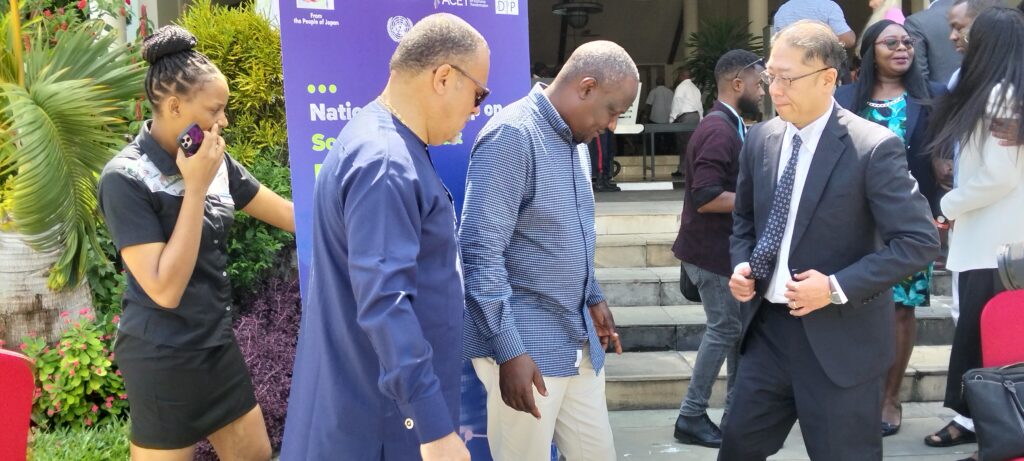
Finance Cabinet Secretary John Mbandi visibly unhappy with the Credit Ratings for Kenya by International Organizations. (Mwakwaya Raymond)
By Mbungu Harrison
Email, thecoastnewspaper@gmail.com
In a bold step toward enhancing its financial credibility, Kenya has hosted a high-level National Workshop on Sovereign Credit Ratings aimed at improving its credit profile and reducing borrowing costs.
The event, held in Mombasa, brought together policymakers, financial regulators, international partners, and private sector leaders to strengthen Kenya’s capacity to manage and influence its sovereign credit ratings.
The national treasury and economic planning, cabinet secretary John Mbadi emphasized the importance of a strong credit rating to the country’s development goals.
“Credit ratings shape development finance and are a vital part of the financial development ecosystem. A stronger sovereign rating is a catalytic milestone because it lowers the country’s perceived risk profile across international capital markets, directly reducing the cost of borrowing and widening the pool of available financing. This calls for effective engagement with credit agencies,” he said.
The workshop focused on building Kenya’s technical capacity in managing sovereign credit ratings, from data preparation and fiscal transparency to strategic engagement with global rating agencies.
It was convened by the Government of Kenya in partnership with the United Nations Development Programme (UNDP), AfriCatalyst, United Nations Economic Commission for Africa (UNECA), African Center for Economic Transformation (ACET), and the African Peer Review Mechanism (APRM) with support from the Government of Japan.
Speaking ahead of the meeting, Dr. Daouda Sembene, President and CEO of AfriCatalyst, stated that Credit ratings directly shape the cost of borrowing.
“Credit ratings directly shape the cost of borrowing. By strengthening coordination and technical capacity, Kenya is moving from being rated to driving its rating story. This effort will reduce borrowing costs and expand access to sustainable financing for development,” Sembene said.
The initiative aligns with Kenya’s Vision 2030 and Medium-Term Plan IV (2023–2027), which emphasize fiscal stability and sustainable economic growth.
UNDP Resident Representative in Kenya, Dr. Jean-Luc Stalon, lauded the country’s reform momentum following its recent credit rating experience.
“Kenya’s upgraded credit rating shows that ratings are not fixed,” said Dr. Stalon. “A downgrade in 2024 was reversed within a year through credible reforms and sustained engagement. Stronger ratings are instruments of trust — they determine whether Kenya can access affordable finance to power Vision 2030 and achieve the SDGs.
Better ratings mean fairer borrowing terms, more fiscal space for social investments, and new opportunities for Kenya’s youth,” he noted.

Kenya’s economy, valued at USD 110 billion in 2024, has grown steadily since achieving middle-income status in 2014.
Meanwhile, official development assistance has declined from 4.7% of gross national income (GNI) in 2015 to 3.2% in 2023, making capital markets the primary source of long-term development financing.
Currently, interest payments consume over 32% of government revenues. Kenya’s sovereign credit ratings stand at Caa1/Positive by Moody’s, B-/Stable by Fitch, and B/Stable by S&P.
On October 2, 2025, the government successfully conducted a liability management operation, raising USD 1.5 billion in two tranches: a 7-year bond at 7.875% and a 12-year bond at 8.7% to prepay the 2028 maturity.
Addressing the gathering, the deputy ambassador of Japan in Kenya, Mr Hiroshi Ogihara, noted that the high cost of capital remains a constraint for private sector investment in Africa.
“Over the next decade, African nations need to raise substantial investment capital – an estimated $100 billion annually for infrastructure, $45 billion for energy, and $30 billion for climate change initiatives.
Addressing borrowing costs and ensuring adequate financing are urgent development priorities,” he said.
A major outcome of the Mombasa workshop was the announcement of the Kenya Inter-Agency Credit Rating Committee.
This body will include the National Treasury, Central Bank of Kenya, Kenya National Bureau of Statistics, Parliament’s Budget Office, Auditor-General, and key ministries.
It will provide a permanent mechanism for structured engagement with credit rating agencies, coherent communication of economic data, and continuous monitoring of Kenya’s credit indicators.
Participants also endorsed the Kenya Credit Rating Action Plan (2025–2026), which outlines immediate and medium-term reforms to strengthen fiscal transparency, institutional coordination, and sovereign rating management in line with national development goals.
Dr Stephen Karingi, director of the macroeconomics, finance and governance division at UNECA, emphasized the broader implications of sovereign ratings.
“We believe that sovereign credit ratings must be embedded within a broader strategy for capital markets development. Strong ratings can unlock access to long-term financing, but only if they are paired with deep, resilient, and inclusive financial markets.” he said.
The workshop was part of the Africa Credit Ratings Initiative (ACRI), a flagship programme by UNDP and AfriCatalyst with support from the Government of Japan.
AfCRI works with African countries to enhance engagement with rating agencies, address methodological biases, and strengthen national credit management frameworks.
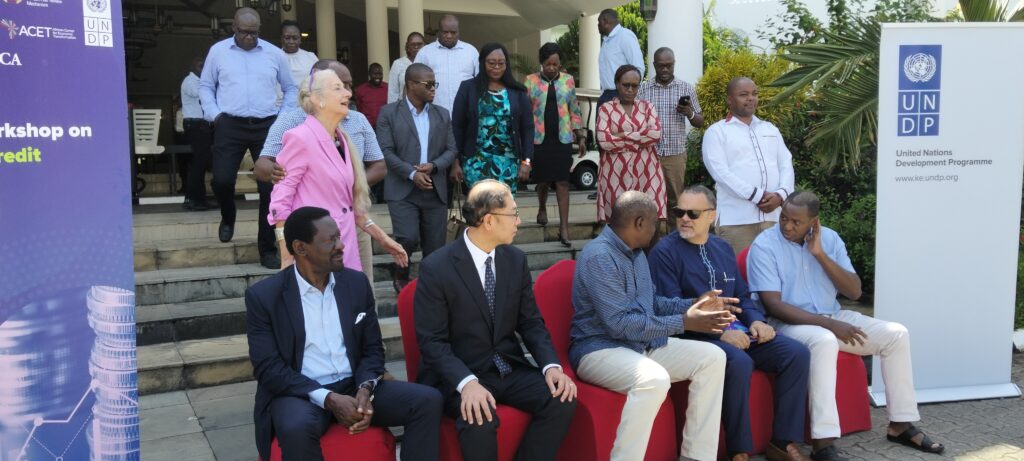
Since its launch in 2024, the Africa Credit Ratings Initiative has supported 18 African countries through eight capacity-building workshops – five national and three regional – training 232 officials.
The Mombasa workshop further solidified the initiative’s convening role and partnership with the Government of Kenya, especially at a time when development financing priorities are rapidly evolving.
About The Author