Troubling Trend: Implications of Unjust Deportation of Filipino Seafarers to Maritime Industry

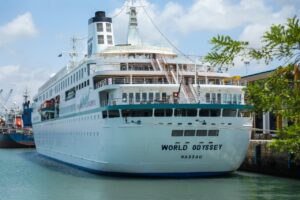
Filipino seafarers abandoned at sea. (Photo/ Courtesy)
Andrew Mwangura
Email, thecoastnewspapr@gmail.com
The recent wave of deportations targeting Filipino crew members aboard cruise ships, particularly the Carnival Sunshine, represents a deeply troubling escalation of immigration enforcement that undermines due process and casts a shadow over the global maritime industry.
Since spring 2025, U.S. Customs and Border Protection (CBP) has detained and deported at least 28 Filipino crew members from the Carnival Sunshine, with over 100 seafarers from various cruise lines across the United States facing similar fates.
These workers, holding valid C1/D work visas, have been accused of violations—often linked to alleged involvement in online chat groups containing child pornography—but have been provided no evidence, no formal charges, and no opportunity for legal recourse.
While Kenyan seafarers have not been explicitly targeted in this crackdown, the broader implications of these actions threaten the stability of the maritime workforce, including Kenyan workers who form a significant portion of cruise ship crews.
This editorial critiques the lack of transparency, the erosion of due process, and the far-reaching consequences for the maritime industry and global labor rights.
The deportations began in April 2025, with CBP officers boarding the Carnival Sunshine in Norfolk, Virginia, to detain Filipino crew members.
According to the Pilipino Workers Center (PWC), these workers were forcibly removed, often in handcuffs, and subjected to harsh treatment, including being denied food and water during detention.
One seafarer, Marcelo Morales Jr., described the experience as “traumatic,” recounting how his valid 10-year visa was revoked without evidence after being accused of consuming illicit material.
On August 17, four crew members were detained, accused of participating in an online chat group with illicit links, yet no proof was presented, and all denied the allegations.
The pattern is unmistakable: CBP’s actions rely on unsubstantiated claims, with deportees coerced into signing paperwork under threats of $250,000 fines or jail time, only to face a 10-year reentry ban. This approach violates fundamental principles of fairness and instills fear among cruise ship crews worldwide.
Although Kenyan seafarers have not been directly targeted in this specific crackdown, the precedent set by these deportations places them at risk.

Kenyan workers, like their Filipino counterparts, undergo rigorous background checks to obtain C1/D visas, ensuring compliance with U.S. immigration standards.
They are integral to the maritime industry, with many serving on cruise ships and cargo vessels. The aggressive enforcement tactics used against Filipino seafarers could easily extend to other nationalities, including Kenyans, who rely on these jobs to support extended families.
The uncertainty created by such actions threatens their livelihoods, as the fear of arbitrary deportation looms large.
For Kenyan seafarers, who may lack the robust advocacy networks available to Filipinos, the potential for similar treatment could lead to financial devastation and social stigma, even without direct evidence of wrongdoing.
The broader context of these deportations raises serious questions about CBP’s motives.
The Trump administration’s announcement on August 21, 2025, of a review of 55 million U.S. visas, including the suspension of work visas for foreign commercial truck drivers, suggests a protectionist policy shift.
The PWC and other advocates argue that the deportations may be driven by deportation quotas, a claim supported by reports of similar actions against crew members on other cruise lines, such as Victory Cruise Lines and Viking Expeditions.
CBP’s vague confirmation that the individuals were “found inadmissible” offers little clarity, fueling suspicions of political motivations over justice.
The State Department’s review, led by Secretary Marco Rubio, further signals a clampdown on foreign labor, which could exacerbate shortages in industries like maritime and transportation, where international workers are essential.
The cruise industry faces significant operational challenges as a result.
With over 1,000 crew members on a ship like the Carnival Sunshine, the removal of 28 workers disrupts operations, placing undue strain on remaining staff. Carnival Cruise Line’s response— “This is a law enforcement matter. Carnival always cooperates with law enforcement investigations”—does little to reassure workers who feel abandoned by their employer.
Advocacy groups have urged Carnival to provide legal support and advocate for its employees, arguing that the company profits from their labor and should protect their rights.
The failure to do so risks long-term labor shortages, as seafarers from the Philippines and other nations, including Kenya, may avoid U.S.-based cruise lines due to the precarious conditions.
The human cost is profound. Filipino seafarers, often primary breadwinners, face financial ruin and emotional trauma upon deportation.
The 10-year reentry ban effectively bars them from resuming their careers in the U.S. maritime industry.
For Kenyan seafarers, the threat of similar treatment looms, even if they have not yet been targeted. These workers, vetted and cleared for employment, deserve better than to live in fear of arbitrary accusations.
The Philippine Embassy has issued advisories on child pornography laws, but its limited engagement on this issue is concerning.
The Kenyan government, while not yet addressing specific deportations, must proactively protect its seafarers, ensuring they are not caught in future crackdowns.
This crackdown reflects a broader erosion of due process, a cornerstone of democratic societies.
Deporting individuals without evidence, charges, or legal representation undermines the rule of law and sets a dangerous precedent.
The maritime industry, vital to global trade and tourism, relies on international workers who deserve respect and fairness.
The U.S. government must provide transparency regarding the evidence behind these deportations or halt them entirely. Carnival and other cruise lines should offer legal support and advocate for their employees rather than deferring to law enforcement.
The Philippine government as well as the ITF and the New York based Center for Seafarers Rights must press for investigations into CBP’s actions and ensure Seafarers’ rights are upheld.
In conclusion, the deportation of Filipino seafarers from Carnival Sunshine and other cruise ships is an injustice that demands urgent attention.
While Kenyan seafarers have not been directly targeted, the precedent set by these actions threatens their livelihoods and the stability of the maritime industry.

These workers, who have passed stringent vetting processes, are being stripped of their careers based on unproven allegations, leaving their families and communities in distress.
Stakeholders—governments, cruise lines, and advocacy groups—must work together to restore fairness, protect seafarers’ rights, and prevent further harm to these essential workers and the industries they support.
The author is a policy analyst specializing in maritime governance and blue economy development.
About The Author