Removing COMARCO 3652: A Turning Point for Maritime Safety in Kenya

Leading marine and specialized contractor. (Photo/CourtesY)
By Andrew Mwangura
KMA’s decisive action to clear an abandoned barge off Nyali must spark a broader strategy to prevent future maritime hazards, protect the environment, and hold vessel owners accountable.
The Kenya Maritime Authority’s recent public notice announcing its intention to remove and dispose of the abandoned barge COMARCO 3652 off Nyali, Mombasa County, is more than a procedural announcement. It is a clear signal of the pressing challenges facing maritime safety, environmental protection, and vessel accountability in our waters.
According to the notice, the grounded barge poses significant risks to both the marine environment and the safety of navigation.
These are not minor concerns. Mombasa’s busy shipping lanes are vital for Kenya’s economy, serving as a gateway for regional trade. They also pass through delicate marine ecosystems that sustain fisheries, tourism, and coastal protection. An abandoned or derelict vessel in such a location is not merely an eyesore — it is a direct threat to livelihoods, safety, and the environment.
KMA’s action is anchored in the Merchant Shipping Act, 2009, which empowers the Director General to declare such vessels abandoned and take necessary measures for their removal.
Invoking Sections 322 and 323 of the Act is a firm statement that maritime hazards will not be allowed to persist unchecked.
For too long, derelict vessels have lingered in Kenyan waters without decisive intervention, eroding public confidence in maritime governance and risking irreversible harm to our coastline.
Yet the removal of this barge also prompts broader questions. How did the vessel come to be abandoned? What steps were taken to locate and compel its owners to act?
While the Authority is right to move forward, the polluter-pays principle must guide such actions. Under international maritime norms, the owners or operators should bear the costs of removal and any damage caused — not the Kenyan taxpayer.
Failure to enforce this principle risks setting a precedent where irresponsible vessel operators can simply walk away from their obligations.
The notice allows seven days for any interested party to submit claims of ownership, a necessary safeguard in the process. But it also highlights the ongoing weakness in vessel registration and tracking systems.
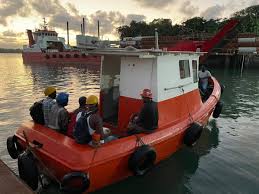
When vessel ownership is murky — due to poor record-keeping, informal transfers, or outdated databases — authorities lose valuable time identifying responsible parties.
Kenya must strengthen its maritime registry to ensure that every vessel in our waters is linked to a verifiable, accountable owner.
From an environmental perspective, the urgency is clear. Abandoned vessels can leak fuel, lubricants, and other hazardous substances into the ocean, damaging coral reefs, mangroves, and seagrass beds.
These ecosystems are not only ecologically valuable but also vital to food security, shoreline stability, and the tourism economy. A grounded vessel in Nyali could disrupt fishing activities, deter recreational use of the area, and tarnish the image of Mombasa as a clean and safe maritime destination.
Safety concerns are equally pressing. Derelict vessels can obstruct navigation, especially in busy coastal waters, increasing the risk of collisions.
In bad weather, their structures can break apart, sending debris into shipping channels or entangling fishing gear. Removing COMARCO 3652 is therefore both an environmental and navigational necessity.
However, the real test of maritime governance is not in reacting to hazards but in preventing them. KMA’s intervention is commendable, but by the time a vessel is declared abandoned, damage may already have occurred.
Kenya needs an early-warning system to identify vessels at risk of abandonment — such as those left idle for long periods or showing signs of neglect — and to compel timely maintenance or removal.
This preventive approach will require coordination between KMA, the Kenya Ports Authority, the Coast Guard, and local communities. Fishermen, tourism operators, and coastal residents are often the first to notice when a vessel is in trouble. By encouraging public reporting and ensuring a swift response, authorities can avert many of the risks that abandoned vessels present.
Kenya can also draw lessons from countries with more established removal frameworks. In places like Australia and Canada, abandoned vessel removal programs are funded partly through vessel registration fees and partly through government support, with strict timelines for compliance and penalties for non-cooperation. Such models could be adapted locally, ensuring a dedicated fund for rapid response without diverting resources from other maritime priorities.
The removal of COMARCO 3652 should not be treated as an isolated clean-up effort. It should be a turning point toward a coherent national strategy on abandoned and derelict vessels. This includes tougher enforcement of ownership responsibilities, better monitoring, stronger legal tools for cost recovery, and active community engagement in maritime stewardship.
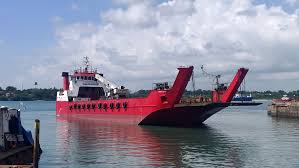
Kenya’s oceans are a shared resource and a cornerstone of our national development. Protecting them from hazards like abandoned vessels is not just a legal obligation but a moral one.
As we act to remove this barge, we must also commit to preventing future cases — because the measure of success will not be in how well we clear COMARCO 3652, but in ensuring it is the last vessel left to decay in our waters.
Andrew Mwangura is a maritime policy analyst specializing in maritime governance and blue economy development.
About The Author