Powerful Stride in Regional Maritime Collaboration

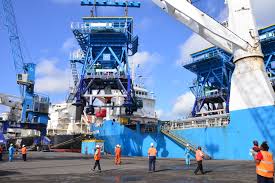
Mogadishu Port (Photo/ Courtesy)
By Andrew Mwangura
Email, thecoastnewspaper@gmail.com
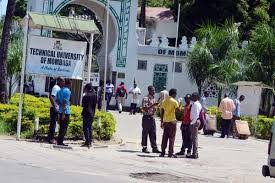
On July 28, 2025, a delegation from the Mogadishu Port Authority and AL Port was warmly welcomed at the Technical University of Mombasa (TUM) with a guard of honour by varsity cadets, setting the stage for a landmark engagement with the Institute of Maritime and Seafaring Studies.
This visit marks a pivotal moment in regional maritime collaboration, signalling Kenya’s growing influence as a hub for maritime education and Somalia’s commitment to revitalising its port operations.
The strategic discussions centered on capacity building for Mogadishu Port personnel, a move that promises to strengthen maritime expertise and foster economic growth across the region.
This initiative is not only a milestone for TUM and Kenya’s seafarers but also a beacon of hope for regional cooperation in the blue economy.
For the TUM, this collaboration underscores its role as a regional leader in maritime education.
TUM’s Institute of Maritime and Seafaring Studies, recently bolstered by the launch of the Mombasa Maritime Resource Centre in partnership with the Association of Maritime Practitioners Kenya, is uniquely positioned to address the skills gap in the maritime sector.
The institute’s comprehensive curriculum, blending advanced theoretical instruction with practical training, equips students with the expertise needed to navigate the complexities of modern maritime operations.
By hosting the Mogadishu delegation, TUM demonstrates its capacity to extend its world-class training beyond Kenya’s borders, fostering a new generation of skilled professionals who can drive the blue economy in East Africa.
This partnership enhances TUM’s reputation as a center of excellence, attracting further investment and collaborations that will benefit its students and faculty.
For Kenya’s seafarers, this initiative opens new avenues for professional growth and global competitiveness. The maritime industry, which carries over 90% of international trade, faces a global shortage of skilled professionals, with an estimated deficit of 150,000 seafarers by 2025.
Kenya’s seafarers, trained at institutions like TUM and Bandari Maritime Academy, are well-placed to fill this gap, particularly as Europe’s traditional seafarer supply dwindles.
The collaboration with Mogadishu Port offers practical opportunities for Kenyan graduates to engage in real-world training programs, enhancing their employability in high-paying international maritime jobs.
A second officer on a foreign vessel, for instance, can earn up to USD 6,000 monthly, tax-free—a stark contrast to local salaries. By supporting Somalia’s port revitalization, Kenyan seafarers gain exposure to regional projects, building their expertise and positioning Kenya as a supplier of top-tier maritime talent.
The global North offers inspiring examples of how such collaborations can thrive. Norway’s maritime education system, exemplified by institutions like Aboa Mare Maritime Academy, integrates industry partnerships, cutting-edge simulation technologies, and robust government support to produce globally competitive seafarers.
Similarly, the Organisation for Economic Co-operation and Development (OECD) emphasizes fostering critical thinking and innovation in maritime training to meet evolving industry demands.
Kenya can draw lessons from these models by prioritizing sustained investment in training infrastructure and forging strong industry-academia linkages.
The partnership between TUM and Mogadishu Port mirrors these principles, combining academic rigor with practical training to address regional needs while aligning with global standards.
This collaboration is a testament to the power of regional synergy. Somalia’s Mogadishu Port, a critical gateway for trade in the Horn of Africa, stands to benefit from TUM’s expertise in port operations and personnel training.
Enhanced capacity at Mogadishu Port will improve efficiency, reduce cargo dwell times, and boost trade connectivity, benefiting landlocked neighbors like Ethiopia and South Sudan.
For Kenya, this partnership strengthens its strategic position as a maritime hub, complementing efforts to revive the competitiveness of Mombasa Port, which handled 1.32 million twenty-foot equivalent units in 2023.
By sharing knowledge and resources, both nations can address common challenges like workforce shortages and outdated infrastructure, paving the way for a more resilient regional maritime ecosystem.
The success of this initiative hinges on sustained commitment. TUM and its partners must continue to update curricula, expand industry ties, and secure government backing to ensure long-term impact.
As East Africa’s maritime landscape evolves, this collaboration sets a precedent for how shared goals and mutual support can transform challenges into opportunities.
Kenya and Somalia are not just building ports—they are building a future where the blue economy thrives, driven by skilled professionals and regional unity.
This is a powerful stride toward maritime excellence, and its ripples will be felt across the Indian Ocean for generations to come.
The author is a policy analyst specialising in maritime governance and blue economy development.
About The Author