Japan’s Strategic Importance on Indo-Pacific and Middle East Deployment 2025

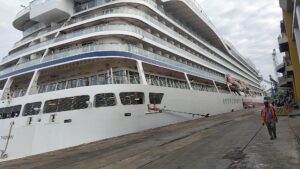
Japan Maritime Self-Defense Force (JMSDF) (Photo/ Courtesy)
By Andrew Mwangura
Email, thecoastnewspaper@gmail.com
As the world grapples with shifting geopolitical dynamics, the Indo-Pacific and Middle East (IMED25) regions have emerged as a critical arena for global security and economic stability.
Against this backdrop, the Japan Maritime Self-Defense Force (JMSDF) has launched IMED25, a strategic initiative underscoring Japan’s commitment to fostering peace, stability, and cooperation in these vital regions.
The deployment, led by commanding officer Captain Amano Shinauka of Minesweeper Division 3, marks a significant milestone in Japan’s maritime diplomacy.
From March 13 to 16, JMSDF vessels will dock at the Port of Mombasa for the first time in history.
This visit is not merely symbolic; it represents a tangible step toward deepening Japan-Kenya defense ties and reinforcing Japan’s role as a key security partner in the Indo-Pacific and beyond.
Japan-Kenya New Defense Cooperation
The IMED25 deployment follows the signing of a Statement of Intent on defense cooperation and exchanges between the ministries of defense of Japan and Kenya during President William Ruto’s visit to Japan in February 2024.
This agreement laid the groundwork for enhanced collaboration in areas such as maritime security, counter-piracy, and disaster response.
Kenya, as a regional hub and a gateway to East Africa, plays a pivotal role in ensuring the security of vital sea lanes in the Indian Ocean.
The JMSDF’s visit to Mombasa signals Japan’s recognition of Kenya’s strategic importance and its willingness to work closely with African nations to address shared security challenges.

Broader Implications of IMED25
The IMED25 deployment is part of Japan’s broader strategy to promote a “Free and Open Indo-Pacific” (FOIP), a vision that emphasizes the importance of rule-based order, freedom of navigation, and economic prosperity.
By deploying its naval assets to the Indo-Pacific and Middle East, Japan is sending a clear message: it is committed to safeguarding the global commons and ensuring that these regions remain stable and accessible to all.
The Indo-Pacific and Middle East are home to some of the world’s busiest shipping routes, carrying a significant portion of global trade, including energy resources.
Any disruption in these waters could have far-reaching consequences for the global economy.
Japan, as a maritime nation heavily reliant on these sea lanes, has a vested interest in maintaining their security.
Moreover, the deployment highlights Japan’s proactive approach to addressing non-traditional security threats, such as piracy, illegal fishing, and natural disasters.
By engaging in joint exercises and capacity-building initiatives with partner nations, the JMSDF is contributing to the development of a more resilient and cooperative security architecture in the region.
Model for International Collaboration
The IMED25 deployment is not just about Japan asserting its presence; it is about fostering international collaboration.
By working closely with countries like Kenya, Japan is demonstrating that security in the Indo-Pacific and Middle East is a shared responsibility.
This collaborative approach is essential for addressing the complex and interconnected challenges facing these regions.
As the JMSDF vessels dock in Mombasa, they bring with them the promise of a stronger partnership between Japan and Kenya—one that extends beyond defense to encompass economic and cultural ties.
This visit is a testament to the power of diplomacy and the importance of building bridges between nations.

The Indo-Pacific and Middle East Deployment 2025 is a bold and timely initiative that underscores Japan’s commitment to global security and stability.
By engaging with partners like Kenya, Japan is not only enhancing its own security but also contributing to the collective well-being of the international community.
As Captain Amano Shinauka and his crew arrive in Mombasa, they carry with them the hopes of a more secure and prosperous future for the Indo-Pacific and Middle East.
Their mission is a reminder that in an increasingly interconnected world, cooperation and collaboration are the keys to overcoming the challenges of tomorrow.
The IMED25 deployment is more than a military exercise; it is a symbol of Japan’s enduring dedication to peace, stability, and the rule of law.
In a world fraught with uncertainty, such initiatives offer a beacon of hope and a roadmap for a brighter future.
Mwangura is a maritime policy expert with extensive experience in African maritime affairs.
About The Author