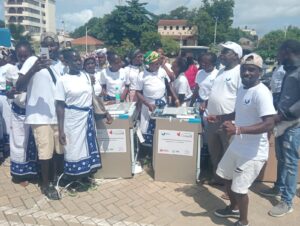
Chale Community Boardwalk Launched to Boost Ecotourism and Coastal Conservation
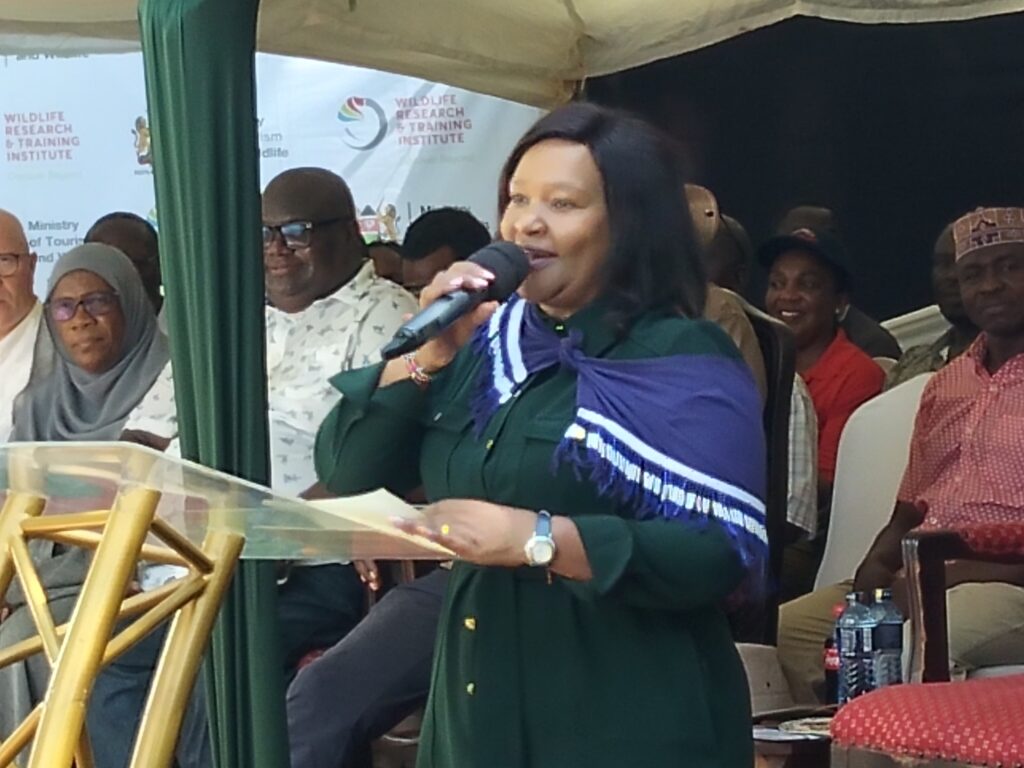
Tourism and Wildlife Cabinet Secretary Rebecca Miano addressing Chale community residents in Kwale County. (Photo By Mwakwaya Raymond)
By Mwakwaya Raymond
Email, thecoastnewspaper@gmail.com
The Government of Kenya, in partnership with conservation agencies and the local community, has officially launched the Chale Community Boardwalk and Mangrove Planting Campaign in Kwale County.
This initiative is expected to strengthen ecotourism, restore critical ecosystems, and improve livelihoods along the coast.
Speaking during the launch, tourism and wildlife cabinet secretary Rebecca Miano described the project as a model of sustainable development driven by collaboration between government, communities, and development partners.
“This initiative underscores our collective commitment to sustainable development, environmental conservation, and community empowerment. It demonstrates what can be achieved when communities, government, and partners work together,” she said.
The project, implemented by the Wildlife Research and Training Institute (WRTI) with support from the European Union through the UNEP Go Blue Programme, includes a 100-metre raised boardwalk constructed within the Chale mangrove ecosystem.
The boardwalk is designed to reduce environmental degradation while opening up the area for eco-friendly tourism activities.
The CS noted that the initiative would deliver multiple benefits, including environmental protection, new economic opportunities, and enhanced community livelihoods.
“By providing controlled access through raised walkways, the boardwalk will minimize human disturbance and reduce degradation of mangrove habitats. At the same time, it will unlock new livelihood pathways through ecotourism and nature-based enterprises.”
On her part Kwale Governor Fatuma Achani called on her people to fully embrace the project to better their livelihoods.
Achani appealed for increased investment to complete the next phase of the project which would extend the boardwalk by an additional 800 metres and introduce complementary facilities such as a floating restaurant, cultural centre, and income-generating activities like crab farming and apiculture.
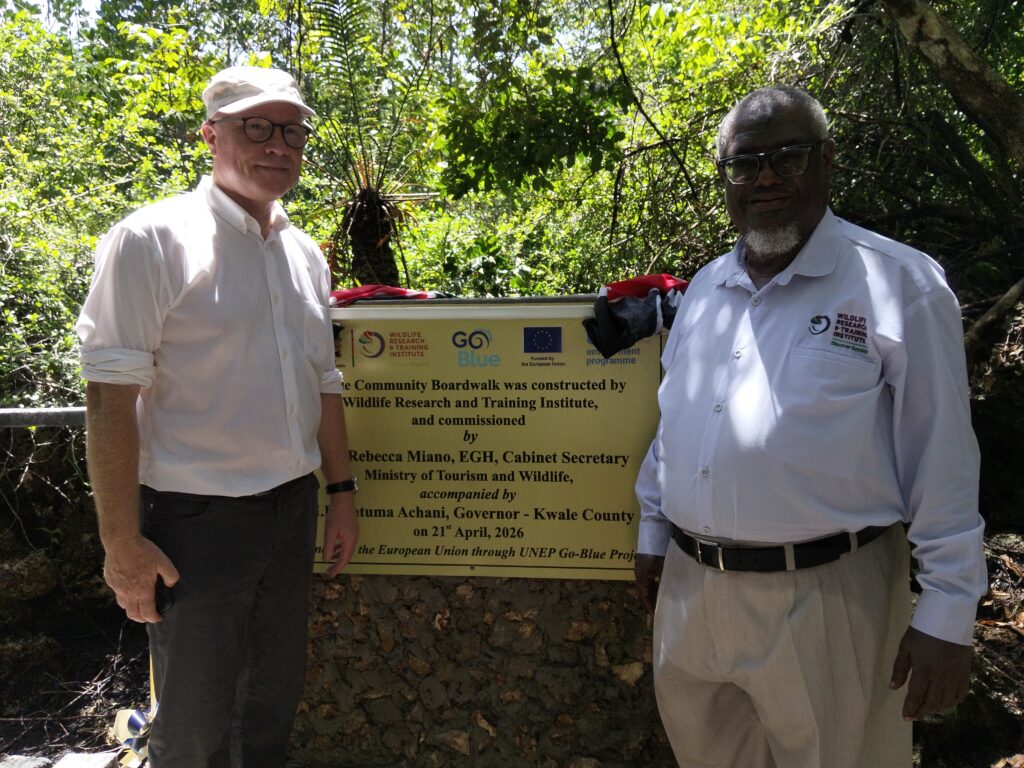
WRTI director general Dr Patrick Omondi emphasized the scientific foundation behind the project noting that it was built on evidence demonstrating the economic value of conservation.
“Over 28 ecosystem services were identified, with their combined net benefits significantly outweighing the costs of management, this proves that conservation when informed by science is not a cost but an investment,” he said.
He added that the project represents a “science-driven, community-led model” that can be replicated across Kenya’s coastal regions.
WRTI board chair Dr David Nkedianye highlighted the transformative potential of the initiative for the local community describing it as a major step toward economic empowerment.
“This is not just the unveiling of a structure; it is the beginning of a transformative journey toward sustainable development, economic empowerment, and community resilience,” he said.
The chair noted that the project would create opportunities for local businesses including tour guides, hospitality providers, and small-scale traders.
“It means more jobs, increased incomes, and stronger livelihoods for families across the community.”
Alongside the boardwalk launch, more than 10,000 mangrove seedlings were planted as part of the national 15 Billion Tree Growing Program.
The effort aims to restore degraded coastal ecosystems while enhancing climate resilience and supporting fisheries.
“Mangroves are among the most valuable ecosystems in the world,” the CS said.
The project has also received support from the Kenya Forest Service, which provided land and permits, as well as local community groups involved in conservation and forest management.
Stakeholders at the event called for sustained collaboration and investment to fully realize the project’s potential and position Chale as a leading destination for community-based ecotourism.
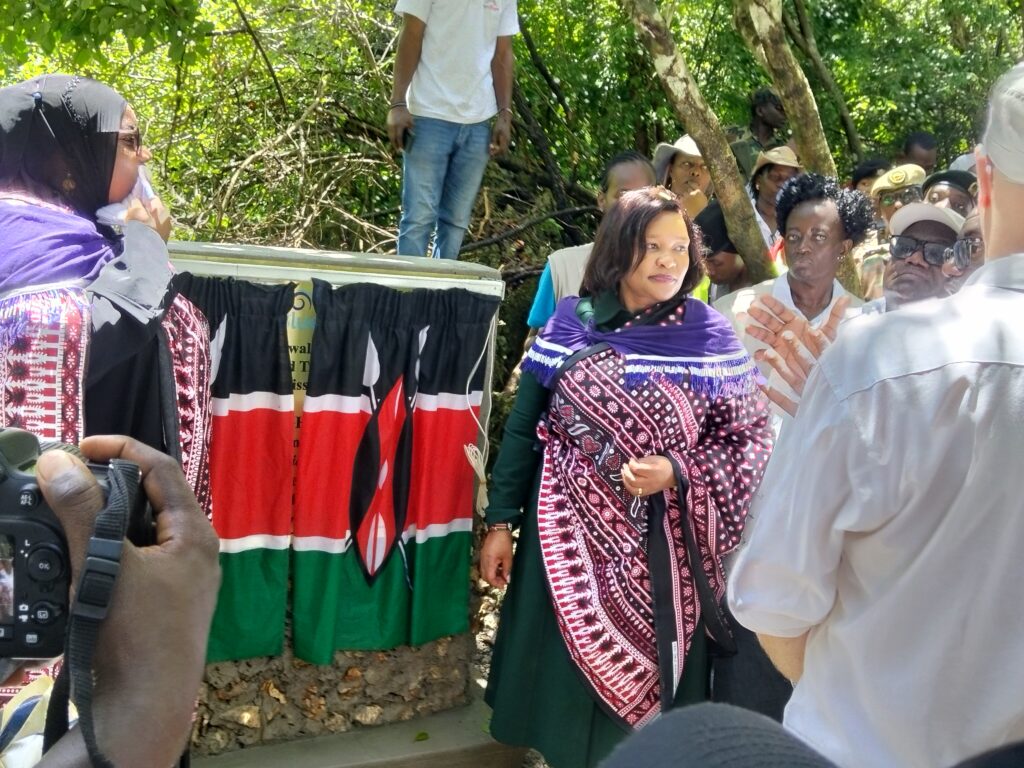
“With adequate support, this eco-project will diversify the local economy, strengthen household incomes, and enhance community resilience to climate change,” said Dr Omondi.
The Chale initiative is expected to serve as a flagship model for integrating conservation, tourism, and community development aligning with Kenya’s broader Blue Economy and sustainable development agenda.
About The Author