Siaya County’s Stance on Nuclear Power vs. Ramula Gold Mining

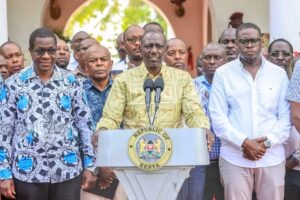
Energy Cabinet Secretary Opiyo Wandayi. (Photo/ Courtesy)
By Prof Abdulrazak Shaukat
Email, thecoastnewspaper@gmail.com
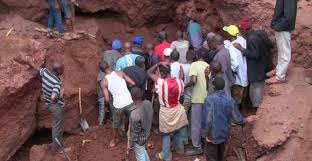
A troubling inconsistency has emerged in Siaya County’s approach to major investment projects. The same County Government now advancing compulsory land acquisition for the Ramula Gold Mining Project—subject to a full EIA, Resettlement Action Plan, and NLC process—is simultaneously endorsing a proposed nuclear power plant without any public evidence of a feasibility study, Environmental and Social Impact Assessment (ESIA), or RAP.
This double standard raises serious governance and environmental questions.
A nuclear power plant on the shores of Lake Victoria would demand a substantially larger land footprint than the Ramula gold mine. Beyond acreage, the site would lie within the ecologically sensitive Lake Victoria basin—a transboundary water body governed by the East African Community Protocol and the Nile Basin Initiative.
The risks of thermal discharge, radiological safety, and accident liability are orders of magnitude higher than those of a regulated gold mine.
Yet, while the Ramula project is being taken through the rigorous safeguards of EMCA, the Land Act, and international standards, the nuclear proposal appears to be proceeding without equivalent due diligence.
Under the Energy Act, 2019 and EMCA, 1999, a nuclear facility is a high-risk project listed in the Second Schedule. It cannot lawfully proceed without:
– A comprehensive feasibility and site selection study;
– A full ESIA submitted to and licensed by NEMA;
– Public participation per Article 69 of the Constitution; and
– A RAP addressing displacement, livelihoods, and emergency planning zones.
Endorsing such a project before these steps undermines the very legal framework the County relies on to acquire land for mining.
It sets a precedent that political support can substitute for statutory compliance.
The people of Siaya cannot be asked to accept compulsory acquisition for gold on grounds of “public interest” and “strict legal process” while watching the same government waive those standards for a nuclear project with far greater environmental and social risk.
Consistent application of the law is the foundation of legitimacy. Selective enforcement breeds opposition, litigation, and investor uncertainty across all sectors.
If Siaya County wishes to explore nuclear energy, they must demand for the following:
1. *Commission independent feasibility and siting studies* with public disclosure.
2. *Subject the project to a full ESIA and RAP* through NEMA and NLC, with the same or higher scrutiny as Ramula.
3. *Engage Lake Victoria stakeholders*—national government, riparian counties, EAC bodies, and communities—before any land allocation.
4. *Separate policy ambition from legal process*—support for nuclear energy is a policy debate; acquisition of land is a legal one. The two cannot be conflated.
Development in Siaya must be guided by law, science, and consistency—not expediency. The Ramula Gold Mining Project is being told to meet every statutory test for land access.
A nuclear plant on Lake Victoria must meet the same tests, and more. To demand less is to invite environmental risk, transboundary disputes, and a loss of public confidence that will undermine both projects.
Siaya can have gold, and it can discuss nuclear. But it cannot have two different rulebooks.
Prof. Shaukat Abdulrazak is the Principal Secretary for Science, Research and Innovation in Kenya.
About The Author