Harbour of Harmony: How Performance Excellence United Kenya’s Ports

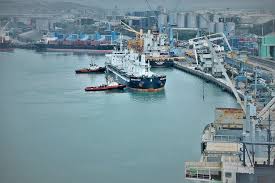
Operations at Port of Mombasa. (Photo/ Courtesy)
By Andrew Mwangura
Email, thecoastnewspaper@gmail.com
For decades, the relationship between port management and dockworkers has been characterized by tension, mistrust, and adversarial negotiations across maritime facilities worldwide.
Yet something remarkable has emerged along Kenya’s Indian Ocean coastline, where the ports of Mombasa and Lamu have become exemplars of how sustained operational excellence can transform workplace culture and forge genuine partnerships between stevedores, longshoremen, and management.
This transformation deserves recognition not merely as a labor relations success story, but as a testament to what becomes possible when collective achievement displaces collective grievance as the foundation of workplace relationships.
The catalytic force behind this harmony has been unmistakable performance gains at both facilities.
Mombasa, East Africa’s largest port and the gateway for goods destined for Uganda, Rwanda, Burundi, South Sudan, and eastern Democratic Republic of Congo, has dramatically reduced vessel turnaround times while increasing cargo throughput.
Lamu, the newer deep-water facility that represents Kenya’s ambitious infrastructure vision, has quickly established itself as a reliable alternative route that eases congestion and expands capacity.
These are not abstract metrics celebrated in boardrooms alone. Every stevedore working the container cranes understands that faster turnaround means more ships, more cargo, and ultimately more shifts and better wages.
Every longshoreman recognizes that operational efficiency translates into job security in an industry where automation constantly threatens traditional roles. When ports perform well, everyone benefits, and this shared prosperity has dissolved long-standing antagonisms.
What makes this harmony particularly noteworthy is that it emerged organically from operational success rather than being imposed through management directives or union compromises.
The dockworkers themselves became invested in maintaining high performance standards because they experienced direct benefits from doing so.
Management, in turn, discovered that treating stevedores and longshoremen as partners in achievement rather than potential obstacles to productivity yielded better results than any supervisory regime could deliver.
When cargo owners began specifically requesting routing through Mombasa and Lamu because of their reliability, the workforce took pride in this reputation. Pride is a powerful motivator that no wage increase alone can purchase.
The ripple effects of this workplace harmony extend far beyond the docks themselves. Port efficiency directly impacts Kenya’s economic competitiveness and the cost of living for millions of citizens who depend on imported goods.
When stevedores and longshoremen work in cooperation with management rather than opposition, supply chains function smoothly, goods reach markets faster, and inflation pressures ease. Businesses planning logistics can rely on predictable timelines.
The entire regional economy benefits from the professional excellence demonstrated by workers who feel valued and management that has earned trust through transparent performance metrics and equitable treatment.
This is economic development in its most fundamental form, built not on foreign investment announcements or policy documents but on the daily competence and collaboration of people doing difficult work well.
Critics might dismiss this harmony as temporary or contingent on continued prosperity, suggesting that any downturn would resurrect old conflicts.
Such cynicism underestimates what has been achieved. The cultural transformation at Mombasa and Lamu represents a fundamental shift in how workers and management perceive their relationship to one another and to their shared enterprise.
Stevedores and longshoremen who have experienced being treated as skilled professionals essential to success rather than interchangeable labor inputs are unlikely to accept a return to adversarial dynamics.
Management that has witnessed the productivity gains possible through genuine partnership will resist reverting to authoritarian approaches.
The foundation of good industrial relations now established creates unprecedented opportunities for strategic transformation.
By applying the Singapore port model, which combines world-class infrastructure with seamless operational integration and regulatory efficiency, Mombasa has the potential to evolve into the Tangier of East Africa, serving as a pivotal maritime gateway that connects multiple regions and trade routes.
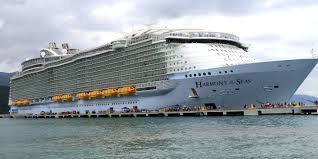
More ambitiously, with continued labour-management cooperation, Mombasa could establish itself as a world-class bunkering hub, providing fuel and provisions to the constant stream of vessels traversing the Indian Ocean, and simultaneously develop into a premier cruise ship destination that capitalizes on Kenya’s coastal attractions and wildlife tourism.
Such diversification requires precisely the kind of workforce flexibility, reliability, and commitment to excellence that current harmonious relations have cultivated.
Meanwhile, Lamu, with its deep-water capabilities and strategic positioning, stands poised to become a world-class transshipment hub in the western Indian Ocean region, rivaling established facilities and capturing cargo that currently bypasses East African ports entirely. These ambitions are not fantasies, but logical extensions of the performance culture and collaborative spirit already demonstrated.
As Kenya continues developing its maritime infrastructure and other ports across Africa seek models for modernization, the lesson from Mombasa and Lamu stands clear: harmony follows performance, and performance flourishes in harmony.
This virtuous cycle, once established, becomes self-reinforcing and offers hope that the future of port operations worldwide need not replicate the conflicts of the past.
Mwangura, an independent maritime consultant, is former SUK Secretary General.
About The Author