KPA’s Performance Milestone Signals a Culture Shift Toward Public Sector Excellence
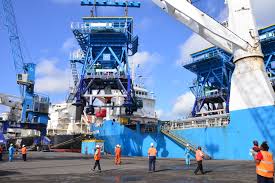
Large vessels docks at Kenya Ports Authority Mombas. (Photo/ Courtesy)
By Andrew Mwangura
Email, thecoastnewspaper@gmail.com
Kenya’s public institutions often find themselves wrestling with the weight of public expectations, the pressure to reform, and the constant scrutiny that accompanies service delivery.
Against this backdrop, the Kenya Ports Authority’s latest achievement—successfully attaining most of its performance contracting targets for the 2024/2025 cycle—deserves more than a passing mention.
It marks not only compliance with an administrative requirement but reflects a deeper cultural evolution within one of the country’s most vital institutions.
Performance contracting in Kenya was never meant to be a box-ticking exercise; it was designed as a powerful tool to reorient public service toward efficiency, accountability, and results.
When the Public Service Commission’s performance management team concluded that KPA had achieved the targets agreed upon with the national government, the finding signified an affirmation of effort, discipline, and a structural commitment to doing things differently.
The port of Mombasa remains the nerve centre of East Africa’s logistics ecosystem, and whatever happens at KPA ultimately reverberates across the region—from the transporter in Kampala, to the importer in Kigali, to the coastal communities whose livelihoods depend on port-related commerce.
In such a complex and consequential environment, the attainment of performance targets is not just a technical accomplishment. It is an endorsement of operational improvements, timely decision-making, and the steady professionalisation of port management.
That the authority has met these standards at a time when global supply chains are still adjusting to post-pandemic realities, geopolitical volatility, and fluctuating shipping costs makes the achievement all the more significant.
But what is perhaps most promising is the posture taken by KPA managing director Captain William Ruto in the wake of the evaluation.
Instead of basking in commendation or treating the achievement as a destination, he assured the PSPMU team of continued improvement in the cycles ahead.
This declaration reflects the mindset that separates sustainable institutional progress from momentary success—the understanding that performance management is a living process, not an annual ritual.
For an organisation of KPA’s scale, transformative change cannot be anchored merely in infrastructural expansion or capital investment. It must rest on a disciplined internal culture where targets matter, outcomes are measurable, and staff at every level understand how their actions advance the organisation’s mission.
This year’s performance contract results offer a window into that shifting internal culture. The Authority has in recent years invested heavily in modernising its operational framework—from digitalising cargo handling processes to refining vessel scheduling systems and enhancing stakeholder coordination.
These improvements may not dominate headlines, but they are the mechanisms through which port efficiency is won or lost. Achieving performance targets is, therefore, a reflection of functional systems aligning, not slogans being recited.
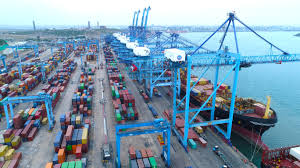
When an institution begins to internalise the logic of measurable performance, it begins to view inefficiency not as an inevitable inconvenience but as an unacceptable deviation.
Moreover, the significance of this shift goes beyond KPA’s internal operations. It contributes to the broader national and regional economic agenda.
A port that functions efficiently enhances investor confidence, accelerates trade facilitation, and strengthens Kenya’s competitive positioning against neighbouring ports that are constantly evolving.
The attainment of performance targets this year sends a message to shipping lines, traders, and development partners: Kenya’s maritime gateway is not merely expanding in physical form—it is maturing institutionally.
This maturity is indispensable as competition grows fiercer, with regional ports investing in automation, dredging, and intermodal connectivity. Without a culture of measurable performance, infrastructure alone cannot deliver efficiency.
The evaluation also underscores the importance of oversight and collaboration between public institutions. The relationship between KPA and the PSC’s performance management team is a model of how accountability mechanisms should work—not as punitive audits, but as frameworks of mutual reinforcement.
The PSC’s role in defining, monitoring, and evaluating performance targets ensures that public institutions remain aligned with national priorities.
Conversely, KPA’s willingness to engage constructively and transparently affirms its dedication to public service. This mutual accountability strengthens national governance and builds public trust in the operation of state corporations.
Yet the journey is far from complete. Meeting most targets is commendable, but it should also inspire a deeper interrogation of areas where gaps remain. Performance contracting works best when institutions embrace honest self-assessment, identify bottlenecks, and approach future cycles with a strategic lens.
Whether these gaps concern human capital, operational delays, resource constraints, or policy misalignments, addressing them proactively will determine the trajectory of KPA’s next performance cycle.
Capt. Ruto’s commitment to continual improvement is therefore both timely and necessary. It invites the organisation to maintain momentum, resist complacency, and aspire toward comprehensive, not partial, fulfilment of targets.
The narrative emerging from this year’s evaluation is clear: KPA is steadily embedding a culture of performance, accountability, and strategic focus.
In a country where public institutions are often criticised for inconsistency, the authority’s achievement stands as evidence that change is possible—and replicable.

The challenge now is to consolidate this progress and ensure that each performance cycle builds upon the last. If KPA continues on this trajectory, it will not only enhance its own operational excellence but also serve as a model of effective governance within the public service.
In an economy where ports are gateways to prosperity, efficiency is not a luxury but a national imperative. KPA’s performance milestone is therefore more than an institutional victory—it is a step toward a more accountable, competitive, and service-oriented Kenya.
Mr. Mwangura,an independent maritime consultant is former SUK Secretary General.
About The Author