Honoring the Unsung Heroes of Our Seas

General Samson Mwathethe (Right) and Elijah Mbaru CEO Kenya Ship Agents Association were among those who attended the Missions to Seafarers. (Photo/ Courtesy)
By Andrew Mwangura
Email, thecoastnewspaper@gmail.com
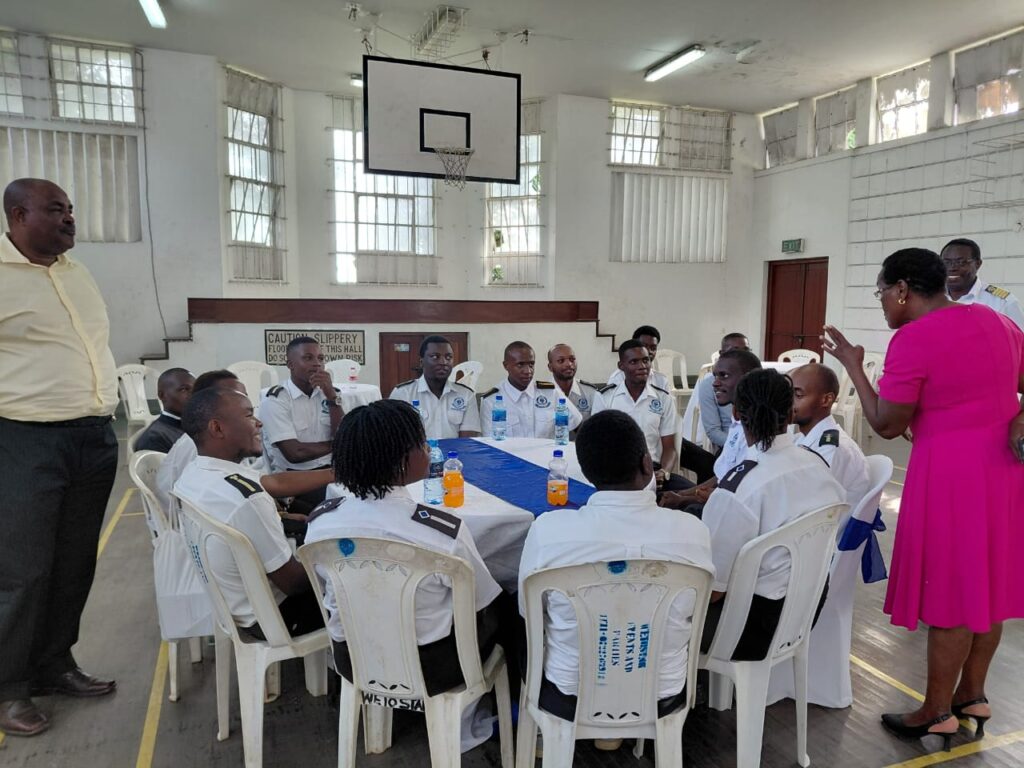
In the bustling Port City of Mombasa, Kenya Maritime Authority staff, students and staff from Bandari Maritime Academy, and the broader maritime community gathered at the Mission to Seafarers for Sea Sunday; a profound moment of recognition unfolded.
Under the spiritual guidance of Rt. Revd. Dr. Alphonse Mwaro Baya, Bishop of the Anglican Church of Kenya, and with a sermon delivered by Most Rt. Revd. Martin Kivuva, Archbishop of the Catholic Archdiocese of Mombasa, the maritime fraternity came together to honor those who brave the world’s most treacherous waters to keep our global economy afloat.
Sea Sunday represents far more than a religious observance; it is a vital recognition of the men and women who navigate life’s most challenging storms, both literal and metaphorical, to ensure that the essential goods sustaining our daily lives reach our shores.
These seafarers and fishworkers, often invisible to the general public, form the backbone of international trade, carrying approximately 90% of global commerce across the world’s oceans.
The significance of Sea Sunday extends globally, serving as a unifying force for the international maritime community.
From the fishing villages of West Africa to the bustling ports of Asia, from the merchant fleets crossing the Atlantic to the small-scale fishermen casting nets in coastal waters, this day brings together diverse maritime communities under a common banner of solidarity and mutual support.
It transcends national boundaries, cultural differences, and denominational divides to celebrate the universal human experience of those who make their living from the sea.
For fishworkers, Sea Sunday holds particular resonance as they face some of the world’s most dangerous working conditions.
Commercial fishing consistently ranks among the most hazardous occupations globally, with workers confronting unpredictable weather, mechanical failures, and the constant threat of accidents far from shore.
The day serves as a reminder that these individuals risk their lives not just for their own livelihood, but to provide food security for millions of people worldwide. Their contribution to global nutrition, particularly in developing nations where fish represents a crucial protein source, cannot be overstated.
The seafaring fraternity faces unique challenges that deserve recognition and support. Extended periods away from family, isolation, mental health struggles, and the physical demands of maritime work create a distinct set of hardships.
Sea Sunday provides an opportunity for society to acknowledge these sacrifices and for maritime communities to offer mutual support and spiritual comfort to those who spend months at sea, often in harsh conditions, to maintain the flow of goods that modern life depends upon.
In Kenya’s context, this observance carries additional weight as the country continues to develop its blue economy potential. The presence of KMA staff alongside students and staff from BMA at the Sea Sunday service demonstrates both the government’s recognition of the maritime sector’s importance to national development and the commitment to nurturing the next generation of maritime professionals.
As Kenya seeks to harness its coastal resources and expand its maritime capabilities, honoring the human element of this industry while training future seafarers becomes increasingly crucial. The men and women who work in Kenya’s ports, aboard fishing vessels, and in maritime services are not merely workers but stewards of the nation’s maritime heritage and future.
The interfaith nature of the Sea Sunday service, with both Anglican and Catholic leadership, reflects the inclusive spirit that defines the maritime community. At sea, religious, ethnic, and national differences often fade in the face of shared challenges and mutual dependence.
This unity of purpose and spirit of cooperation that characterizes life aboard vessels and in fishing communities serves as a model for broader societal harmony.
As we reflect on this year’s Sea Sunday observance, it becomes clear that supporting seafarers and fishworkers extends beyond annual recognition.
It requires ongoing commitment to improving working conditions, ensuring fair treatment, providing adequate healthcare and support services, and maintaining the infrastructure that enables safe and efficient maritime operations.
The prayers offered at the Mission to Seafarers should translate into concrete actions that enhance the welfare of maritime workers.
The global supply chains that deliver everything from food to fuel, from medical supplies to consumer goods, depend entirely on the courage and dedication of seafarers and fishworkers.
Sea Sunday serves as a crucial reminder that behind every container ship, fishing vessel, and maritime operation are real people with families, dreams, and challenges.

Their service to humanity deserves not only our gratitude but our active support in creating a maritime industry that values human dignity alongside economic efficiency.
In honoring these unsung heroes of our seas, we acknowledge that the prosperity of nations and the wellbeing of communities worldwide rest, quite literally, in their capable hands.
The author is a policy analyst specialising in maritime governance and blue economy development.
About The Author