Training the Backbone of Kenya’s Blue Economy
The sea. (Photo/ Courtesy)
By Andrew Mwangura
Email, thecoastnewspaper@gmail.com
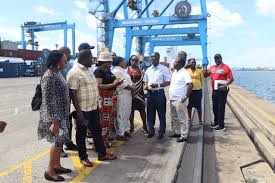
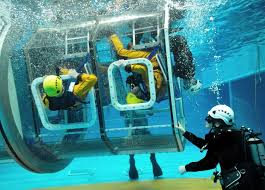
The inspection tour of the Maritime Survival Training and Certification Centre at Bandari Maritime Academy by the Cabinet Secretary for Mining and Blue Economy Hasan Ali Joho alongside principal secretary Harry Kimtai was more than a routine government visit.
It was a clear signal of intent. At a time when Kenya is loudly proclaiming the promise of the Blue Economy, the focus on maritime training infrastructure is both timely and necessary.
Policy declarations and economic blueprints can only go so far; the true measure of seriousness lies in investing in people, skills, and institutions that sustain the sector over the long term.
Kenya’s maritime ambitions have often been articulated in terms of port expansion, shipping routes, offshore resources, and coastal tourism. Yet for decades, the human element has lagged behind.
Seafarers, maritime safety officers, port workers, and marine professionals form the backbone of the entire ecosystem, but training opportunities have remained limited, fragmented, or misaligned with international standards.
The inspection of the Maritime Survival Training and Certification Centre therefore places the spotlight where it should be: on competence, safety, and credibility in global maritime practice.
Maritime survival training is not a ceremonial add-on to seafaring; it is a foundational requirement. In an industry defined by risk, harsh environments, and strict international regulation, the difference between life and death often lies in preparation.
A modern survival training centre ensures that Kenyan seafarers are not only employable but trusted. It assures shipowners, flag states, and insurers that Kenyan-trained personnel can operate under pressure, respond to emergencies, and meet the demanding standards set by international conventions. This is how a country builds a reputation in the global maritime labour market.
The presence of senior leadership from the ministry, alongside the PS responsible for mining and maritime affairs, underscores the growing recognition that the Blue Economy cannot be developed in silos.
Training institutions like Bandari Maritime Academy are strategic national assets. They bridge government policy, industry needs, and international compliance.
By inspecting facilities firsthand, the leadership demonstrates an understanding that effective oversight begins with knowing the realities on the ground, not just reading reports from offices in Nairobi.
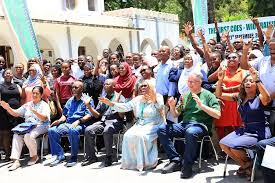
Equally significant is the role played by the governance and management of BMA. The reception by the board chairman Eng. Lung’anzi Chai Mangale, together with board members and the chief executive officer, reflects an institutional maturity that Kenya has sometimes lacked in specialized training bodies.
Strong boards and professional management are essential if public institutions are to deliver results beyond press statements. Training centres must not only be built; they must be run with discipline, transparency, and a relentless focus on quality.
For Kenya, the stakes are high. The country sits strategically along one of the world’s busiest shipping corridors.
The Port of Mombasa and the emerging Lamu Port are gateways not just for cargo but for opportunity. However, without a skilled maritime workforce, Kenya risks remaining a transit point rather than a true maritime nation.
Investing in survival training and certification is therefore an investment in national competitiveness. It enables Kenyan seafarers to access decent work abroad, brings remittances home, and reduces reliance on foreign expertise within domestic maritime operations.
However, infrastructure alone does not make a training centre world class. For the Maritime Survival Training and Certification Centre at BMA to truly compete on the global stage, it must pursue and attain internationally recognised accreditation and classification.
OPITO accreditation, which is widely regarded as the gold standard for safety and emergency response training in the offshore and maritime sectors, is essential.
Equally important is classification and recognition by reputable international bodies such as Lloyd’s Register and oversight alignment with authorities like the UK Coastguard.
These endorsements are not symbolic; they are assurances of quality, consistency, and global acceptability. Without them, even well-equipped facilities risk being sidelined in an industry that operates on trust and compliance.
This visit should also be read as a reminder that training infrastructure must keep pace with global change. The maritime sector is evolving rapidly, with new safety technologies, environmental standards, and operational procedures.
A survival training centre must therefore be dynamic, continuously updated, and properly resourced. Government commitment cannot end with inspections; it must translate into sustained funding, regulatory support, and deliberate alignment with international maritime bodies. Anything less risks turning promising facilities into underutilized monuments.
In a broader sense, the inspection at BMA reflects a shift from rhetoric to action in Kenya’s Blue Economy discourse. For too long, the concept has been treated as an abstract promise, invoked during conferences and strategy launches.
By focusing on training and certification, the government anchors the Blue Economy in practical outcomes: safer seas, skilled workers, and internationally recognised standards. This is the kind of quiet, unglamorous work that builds lasting economic value.Ultimately, the success of Kenya’s maritime and Blue Economy ambitions will be judged not by the number of visits conducted, but by the calibre of professionals produced. If the Maritime Survival Training and Certification Centre at BMA attains global accreditation and becomes a benchmark for excellence, then this inspection tour will be remembered as a meaningful step forward.
It is now up to the government, the academy’s leadership, and industry stakeholders to ensure that the promise of world-class maritime training is fully realised, for the benefit of Kenyan seafarers and the nation as a whole.
Mr Mwangura an, independent maritime consultant, is former SUK Secretary General.
About The Author