Kenya’s Maritime Pulse: How 53 Vessels Signal Economic Vitality and Strategic Intent
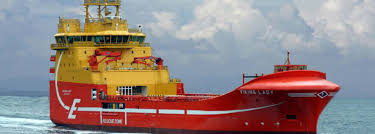
Vessel at Offshore undergoing service. (Photo/ Courtesy)
By Andrew Mwangura
Email, thecoastnewspaper@gmail.com
The announcement that the Port of Mombasa will handle 53 vessels within the next fourteen days—including 29 container ships, 15 conventional cargo vessels, eight car carriers, and one oil tanker—is far more than a routine operational update.
It is a clear signal of the port’s centrality to Kenya’s economy and its enduring relevance as a regional maritime hub. In an era when global trade remains volatile and competition among ports intensifies, this traffic profile reflects the diversity, resilience, and strategic importance of Mombasa as East Africa’s principal gateway.
Such vessel numbers translate directly into economic activity across multiple sectors. Each ship represents cargo owners, shipping lines, logistics firms, truckers, clearing agents, port workers, and downstream industries whose livelihoods depend on the smooth functioning of the port.
Container vessels, which dominate the schedule, are the arteries of modern commerce, carrying everything from industrial inputs to consumer goods that stock Kenyan factories, shops, and markets.
Their prominence in the vessel mix underscores Kenya’s integration into global supply chains and the responsibility placed on port management to deliver efficiency, predictability, and speed.
The presence of 15 conventional cargo vessels is equally significant. Breakbulk and general cargo continue to serve sectors such as construction, agriculture, and project logistics, particularly for oversized or specialized equipment that cannot be containerized.
Car carriers point to steady demand in the automotive sector and consumer purchasing power, while the arrival of an oil tanker highlights the port’s critical role in national energy security.
Together, these vessels demonstrate that Mombasa is not a single-purpose facility but a multipurpose gateway supporting a wide spectrum of economic needs.
Handling 53 vessels in a two-week window is a formidable test of operational coordination. Berth planning, pilotage, towage, cargo handling, yard management, and hinterland evacuation must function as a single, well-rehearsed system.
Any bottleneck—whether at the quay, gate, or along transport corridors—quickly cascades into delays and costs that ripple across the economy.
That Mombasa continues to manage such volumes is a testament to ongoing investments in infrastructure, equipment, and human capital. Yet it is also a reminder that complacency is not an option in an increasingly competitive regional landscape where ports in Tanzania, Djibouti, and elsewhere vie for the same cargo.
The parallel activity at the Port of Lamu, which will handle five vessels during the same period, adds an important strategic dimension. While modest in comparison to Mombasa, Lamu’s traffic signals gradual utilization and the long-term vision behind its development.
Every vessel calling at Lamu contributes to building operational experience, confidence among shipping lines, and economic momentum in the northern corridor.
The coexistence of a busy Mombasa and a growing Lamu reflects a port system in transition, where capacity expansion and diversification are being pursued to future-proof Kenya’s maritime gateway and reduce over-reliance on a single point of entry.
From a policy perspective, these vessel calls reinforce the importance of sustaining reforms in port operations, customs processes, and trade facilitation. High traffic volumes magnify both strengths and weaknesses.
Efficient clearance systems, digital platforms, and strong collaboration between government agencies are no longer optional; they are prerequisites for maintaining competitiveness.
Equally, labor relations, safety standards, and environmental compliance must keep pace with rising activity to ensure that growth is both sustainable and inclusive.
Port performance must be measured not only by ship numbers but by turnaround time, cost efficiency, and customer confidence. Faster vessel clearance lowers freight costs, strengthens exporters, and cushions consumers from inflationary pressures.
Reliable schedules attract repeat calls and new shipping services, deepening connectivity. For Kenya, whose economy depends heavily on trade, the port’s rhythm shapes national productivity and competitiveness.
Sustaining momentum therefore demands constant investment, disciplined management, and a shared commitment by all stakeholders to keep cargo—and the economy—moving without disruption.
Ultimately, the scheduled handling of 53 vessels at Mombasa and five at Lamu within fourteen days is a snapshot of Kenya’s maritime heartbeat. It reflects confidence by global shipping lines, demand from regional markets, and the strategic value of Kenya’s coastline in facilitating trade for landlocked neighbors.
The challenge now is to convert this steady flow of ships into lasting economic gains by relentlessly improving efficiency, reliability, and value addition. This collective effort defines competitiveness, credibility, and Kenya’s standing in global maritime trade.
If Kenya succeeds, its ports will not merely handle vessels; they will anchor national growth and regional integration for decades to come.
Mr. Mwangura, an independent maritime consultant, is former SUK Secretary General
About The Author