Building Kenya’s Maritime Future: The Power of Global Training Partnerships
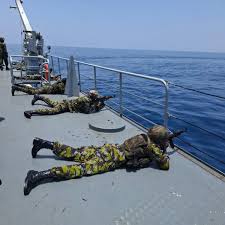
Marine officer on guard. (Photo/ Courtesy)
By Andrew Mwangura
Email, thecoastnewspaper@gmail.com
There was something profoundly symbolic about the recent scene at Moi International Airport in Mombasa.
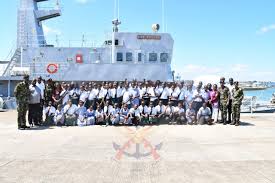
Four young Kenyan maritime cadets—fresh from completing an intensive overseas training programme in South Korea—were welcomed home by Bandari Maritime Academy (BMA) with warmth and well-earned pride.
Beyond the fanfare, however, this homecoming carried far deeper meaning for Kenya’s maritime ambitions and for the thousands of young people aspiring to careers at sea.
The cadets—two women and two men—had spent several months at the Korea Institute of Maritime and Fisheries Technology (KIMFT) under the Global Onboard Training Programme, a flagship initiative anchored in a strategic partnership between BMA and KIMFT.
While their return marks a personal milestone, it also illuminates a path Kenya must pursue with greater urgency if it is serious about securing its rightful place in the global maritime industry.
The central question is not whether such programmes are beneficial, but whether we are doing enough to expand them—and what they reveal about the future of technical and maritime education in our country.
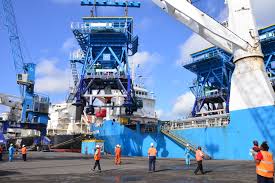
Kenya boasts a coastline stretching more than 500 kilometres along the Indian Ocean, yet we remain largely spectators in an industry that carries over 90 per cent of global trade.
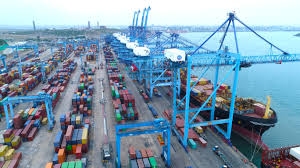
The Port of Mombasa handles millions of tonnes of cargo each year, but the vessels calling at our shores are overwhelmingly crewed by seafarers from the Philippines, India, and Eastern Europe.
This paradox should concern us. We have strategic geography, a growing maritime economy, and a youthful population hungry for meaningful employment. We also have capable institutions such as Bandari Maritime Academy.
What we have long lacked is systematic exposure to international standards and shipboard practices that turn competent trainees into globally competitive seafarers.
This is precisely the value of programmes such as the one undertaken in South Korea. The technical competencies acquired—shipboard operations, safety management, marine engineering, and professional seamanship—are essential.
Yet the most transformative gains lie beyond technical instruction. Immersion in a foreign maritime environment exposes cadets to the discipline, precision, and professionalism that define leading maritime nations.
They learn how to function within multicultural crews, communicate effectively across borders, and internalise the exacting standards demanded by global shipping companies. In short, they learn how to think and perform as international seafarers.
The presence of two female cadets among the returning cohort merits particular recognition—not as symbolic inclusion, but as evidence of real progress in an industry historically dominated by men.
Belinda Adhiambo Abong and Aisha Mueke Ahmed exemplify the growing understanding that competence at sea is determined by skill and dedication, not gender. Their success should encourage more young Kenyan women to pursue maritime careers and prompt training institutions to actively recruit, mentor, and support female cadets.
As the global shipping industry moves—albeit gradually—towards greater inclusivity, Kenya should position itself at the forefront of this transformation.
BMA chief executive officer Dr Eric Katana has reaffirmed the academy’s commitment to expanding international training opportunities through strategic partnerships. This approach should become the norm rather than the exception across Kenya’s technical training ecosystem.
The memorandum of understanding with KIMFT ought to be the first of many—extending to maritime institutions in Norway, Singapore, Japan, and other leading shipping nations. Each partnership widens access for Kenyan cadets while strengthening domestic training through the transfer of skills, standards, and institutional knowledge.
That said, realism is essential. International training programmes require sustained funding, careful coordination, and long-term institutional support. Welcoming home four cadets is commendable, but Kenya produces hundreds of maritime graduates annually.
Scaling up such initiatives will demand stronger government backing, deeper private-sector involvement, and—perhaps most critically—a national appreciation that investing in maritime human capital is an investment in economic growth.
The Indian Ocean economy is expanding, regional trade is intensifying, and the blue economy offers opportunities Kenya cannot afford to forfeit due to inadequate workforce preparation.
The colourful reception at Mombasa airport should therefore be seen not as a conclusion, but as a beginning. These four cadets have demonstrated that Kenyan youth can compete and excel on the global maritime stage when given the opportunity.
The responsibility now rests with policymakers, industry leaders, and training institutions to multiply these opportunities, broaden partnerships, and ensure that many more young Kenyans return home equipped with world-class skills, global experience, and the confidence to build careers at sea—while strengthening Kenya’s maritime sector in the process.
The sea has always connected nations and generated prosperity for those bold enough to embrace it. Kenya’s moment to fully claim its maritime future is now.
Mr. Mwangura, an independent maritime consultant is former SUK Secretary General
About The Author